Misaki Ogura Disappearance: Fifteen Minutes in Doshi
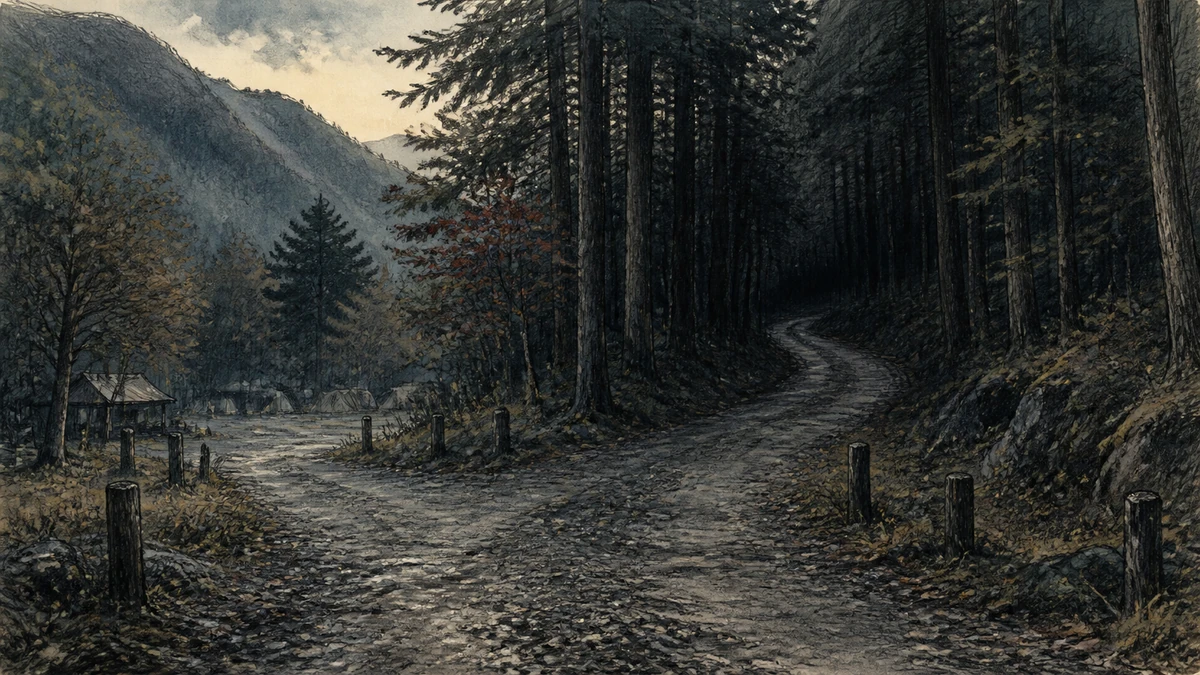
The disappearance of Misaki Ogura in Doshi, Yamanashi, began with a gap of only about fifteen minutes.
On the afternoon of September 21, 2019, a group of children left the tents at Tsubakiso Auto Campground in Doshi, Yamanashi Prefecture, Japan, and went off to play. At about 3:40 p.m., seven-year-old Misaki set out to catch up with them. She wore a black long-sleeved shirt, blue jeans and green trainers. She followed the campground road away from the adults.
It was the last time her family saw her.
The public timeline stops there. Roughly fifteen minutes later, the adults realised she had not reached the other children. They split up to check the campsite, tents, roads and nearby woods. Police were called about an hour after she was last seen. Dusk pressed into the valley, and a road that had meant nothing moments earlier became a place people would walk again and again without ever reaching its end.
The fifteen minutes before the disappearance
Misaki lived in Narita, Chiba Prefecture, and was in her first year of primary school. This was not a gathering of strangers who happened to share a campsite. The party consisted of seven families — twenty-seven people — from a parents’ group that camped and spent time together regularly. According to the timeline later assembled by Misaki’s family, she went alone to find the children who had left before her, and vanished within a window of about fifteen minutes.
The most disturbing part of the case is how little time is missing. Fifteen minutes is small enough to make a child’s total disappearance feel impossible. It is also long enough for every fork, bridge, forestry road and patch of undergrowth to become a direction she might have taken.
The adults searched first. Once police and firefighters arrived, the effort pushed outward from the campground. The next day, around sixty police officers, firefighters and local fire-brigade members joined in, along with a police dog and helicopter. By the fourth day, teams were searching a radius of roughly five kilometres, and a drone equipped with thermal sensing had been sent up. On day five, about 150 Self-Defense Forces personnel joined an operation involving more than two hundred people that day. Police divers worked the Doshi River and other water nearby.
A road was walked, then walked again. A stream was checked, then checked beneath the surface. Each place ruled out left the darkness inside those fifteen minutes undiminished. A new morning arrived without anything that could show them where Misaki had gone.
The Doshi search: a mountain divided into squares of light
The search kept widening. Helicopters looked down through the tree canopy. Drones searched for heat. Dogs went between the trunks. Self-Defense Forces personnel and firefighters moved in lines while police questioned residents along the national road. On September 30, after the family agreed, police released Misaki’s photograph in the hope that someone outside the campground had seen her face.
Her clothing was repeated with every appeal: a black long-sleeved top, jeans, green trainers. First the child disappeared from sight; then every trace that might prove which way she went seemed to disappear with her. Those trainers did not appear in the 2019 search. Neither did her clothes, a footprint, or any other object that could turn the search towards its next step.
The operation reached 268 personnel on its seventh day. Police went back over woods and streams already searched, while divers continued through the water. At noon on day eight, the Self-Defense Forces ended their deployment. On day nine, the local fire brigade that had been there from the beginning also withdrew. By day ten, the core operation had fallen to around thirty-five police officers and firefighters. The mountain did not become smaller as the numbers came down. The amount of ground that could be watched at once did.
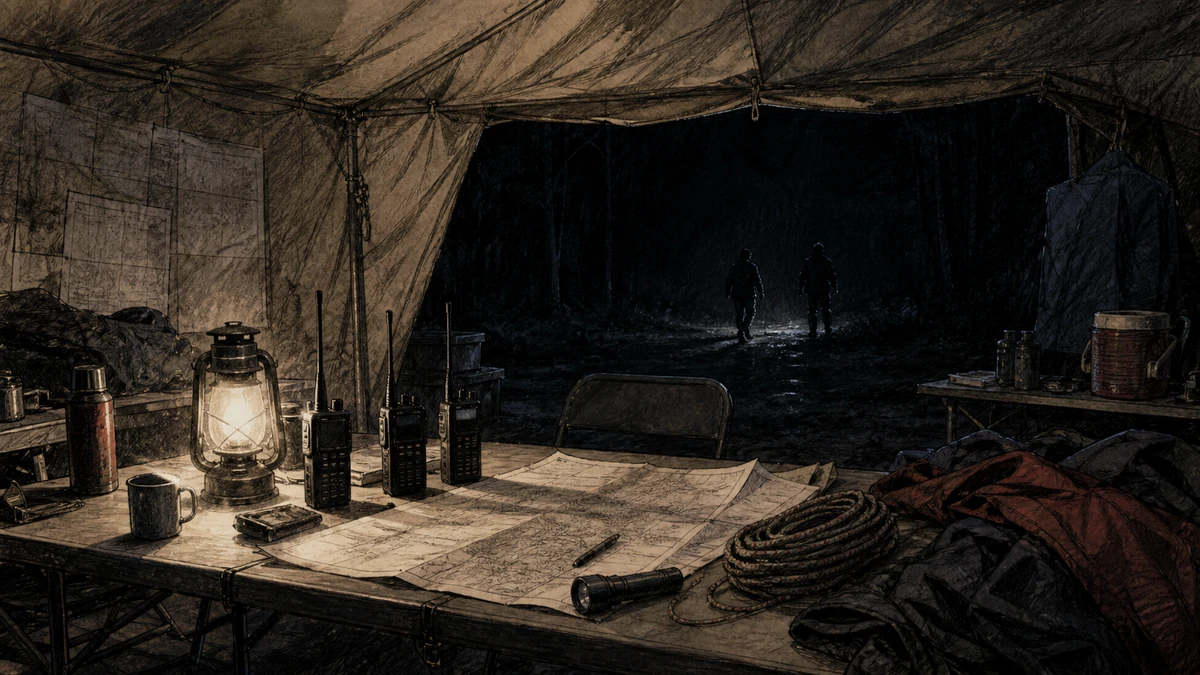
On October 6, the sixteenth day after Misaki vanished, the large-scale operation ended. Her family’s record puts the cumulative number of searchers at about 1,700. Police, firefighters, the Self-Defense Forces, local residents and volunteers had all entered those mountains. When the field command was finally taken down, Misaki seemed suspended inside the same fifteen-minute gap, with no trail anyone could follow.
When the command lights went out, the valley became dark again. The people left. Those fifteen minutes did not.
Two years and seven months later, the first physical trace appeared
After the mass deployment withdrew, police continued receiving information and the family returned to the area again and again. On the second anniversary in September 2021, twenty-four officers split into three teams to search riverbanks and forest. Police had received about 4,100 pieces of information by then. None could lead the search to where Misaki was.
The work did not happen only on anniversaries. The family kept distributing leaflets and updating images of how Misaki might look as she grew older. Police checked each new report. But a missing-person file becoming thicker does not mean the missing person is any closer. Every search without a result only removed one more road that appeared possible.
Time had changed what a search meant. In 2019, people were looking for a child who might answer when called. Two years later, officers walked ground altered by wind and rain, looking at newly exposed soil, stones moved by water and crevices once covered by leaves.
The campground remained open. Traffic still moved along Route 413 through Doshi. Only the path of that afternoon refused to continue. No new witness entered the public record to say which way Misaki turned, whether she left the campground, or what happened after she stepped out of sight.
Then, on April 23, 2022, a volunteer who had continued searching entered the mountain east of the campsite. After two years and seven months of silence, the first thing the mountain yielded was not an answer, but a fragment that could not yet be named.
What appeared in the dry ravine
Near a dry ravine roughly six hundred metres from the campground in a straight line, the volunteer found what appeared to be a fragment of human bone. Police began a new search. Nearby they recovered children’s trainers, a sock, a long-sleeved high-necked top, and further bone fragments. The objects resembled what Misaki had been wearing when she disappeared, but resemblance was not treated as identity before testing was complete.
The first result came on May 12. Mitochondrial DNA from a skull fragment was compatible with a maternal relationship to Misaki’s mother. That method alone could not identify one individual. Two days later, a different bone — part of a shoulder blade — produced an individual DNA profile matching Misaki Ogura. On May 14, Yamanashi Prefectural Police declared that she was dead. The mountain had finally returned part of her, without explaining how she reached it.
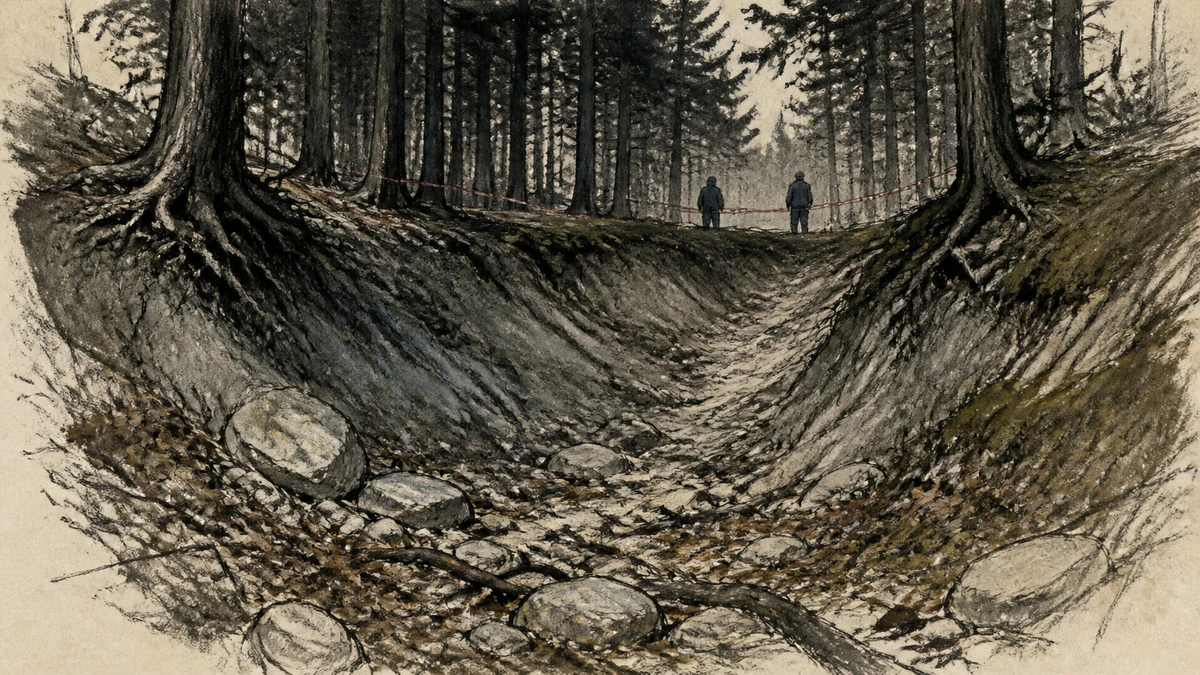
At last, her name had returned to the mountain. What the search had recovered was an identity, not an account of what happened.
Police continued through the ravine, slopes and surrounding forest. More bones were later identified as Misaki’s. In a public statement on May 19, the head of Japan’s National Police Agency said Yamanashi police would continue working to establish the truth from both directions: a possible incident and a possible accident. DNA had answered who. It did not answer how she reached that part of the mountain, when she died, or why.
The unanswered distance was much longer than six hundred metres.
Why was the same mountain searched twice?
The discovery site was not far from the campground, in mountain terrain covered by the enormous mobilisation after Misaki vanished. The question came immediately. In 2019 there had been helicopters, dogs, drones, divers and lines of searchers. Why did the first fragment appear only two years and seven months later?
The public record does not close that question. Leaves cover forest ground. Rain alters a ravine. Searching for a living child is not the same visual task as recognising a small fragment on the ground. Those conditions explain why mountain searches are difficult; they do not prove which route Misaki took, and they do not prove that every recovered item had remained in the place where it was eventually found.
Police have not announced that the death was an accident. They have not announced that it was a crime. The internet has supplied countless theories, but none can substitute for an investigative finding. The family has endured years of attacks that turned guesses towards real people. Inventing another motive does not place another witness inside those fifteen minutes.
Only a few times remain fixed like nails. Around 3:40 p.m. on September 21, 2019, Misaki left the tent area. On October 6, the large-scale search ended. In April 2022, the first discovery emerged from the mountain. On May 14, DNA allowed police to declare that Misaki had died.
No one has been able to finish the sentence that follows.
The final blank in the Misaki Ogura disappearance
September 2025 marked six years since the disappearance. On the family’s official website, Misaki’s mother wrote that the memorial table near the campground had been taken down, a boundary drawn around years of pain. The same statement left something else in place. What happened to Misaki — incident or accident — was still unknown. Police were still investigating both possibilities, and a volunteer search team was continuing to review areas and information.
The newly organised search team said it would re-examine the areas covered and information received from the day of the disappearance onward, and would continue entering the field for anything that might have been missed. That did not mean the DNA identification was in doubt. A person’s identity and the sequence of events that took that person away are two different answers. One is written in the file. The other remains blank.
This is not a story in which recovered remains brought the case to an end. The bones established death, not disappearance. Searchers crossed the ground again and again without reconstructing the route. Six years allowed a family to remove a memorial, but they did not add one answer to that afternoon in 2019.
The mountain gave back her name, and kept those fifteen minutes in the trees.