The Busan Newlyweds: Twenty-One Cameras, and Not One of Them Saw Them Leave
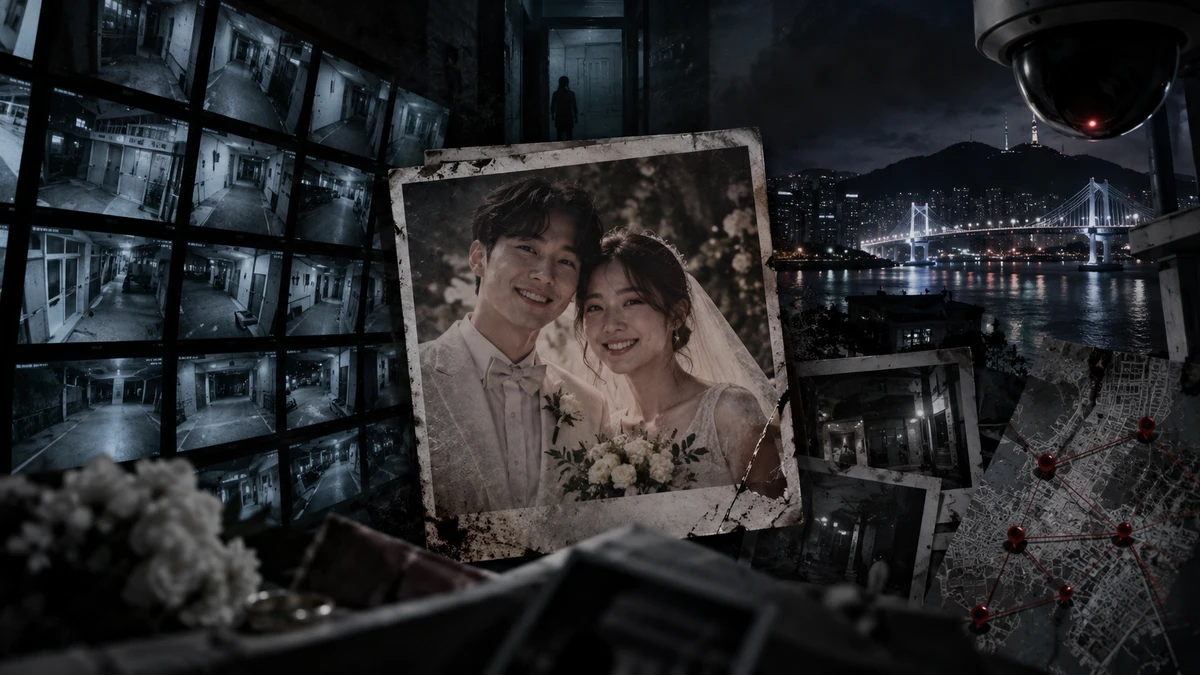
Gwangalli, Suyeong District, Busan, South Korea. The seafront. A block of flats.
This building sees everything. Twenty-one security cameras are fitted around the complex, one of them inside the lift, twenty-four hours a day, who comes in, who goes out, at what minute, all of it recorded.
A couple lived on the fifteenth floor. The husband, Jeon Min-geun, was thirty-four and ran a restaurant that kept him there until the small hours. The wife, Choi Seong-hui, was thirty-three, an actress with a theatre company. They had married in November 2015. Six months. There was a dog in the flat that she doted on.
In May 2016, the building that sees everything missed one thing.
Two people walked into the lift, and neither walked out
Late on the night of 27 May the wife came home from the supermarket with a shopping bag in her hand and stepped into the lift.
The camera in the lift recorded her, the time, and the bag.
Five hours later, a little after three in the morning, the husband closed up the restaurant, came home, and stepped into the same lift.
The camera recorded him too.
That is all there is. Afterwards the police went through every one of the building’s twenty-one cameras, and not one of them had recorded the two of them leaving. In. In. And then nothing.
There are people online who put it this way: they never left the building. The police thought so too, and turned the flat over from end to end, and found nothing.
When the door opened, the bag was still on the table
On 31 May the husband’s father rang the police to say that his son and his son’s wife could not be reached. Officers went up with the family and opened the door.
The flat was tidy.
The things from the supermarket were still on the table, the same bag she had carried into the lift that night. The dog was in the flat, alone, and had been alone for days. The car was in the car park, where it had been the whole time. No blood, no sign of a struggle, no sign that anyone had forced their way in. The only things missing were their phones and their wallets.
Everything of theirs was there. They were not.
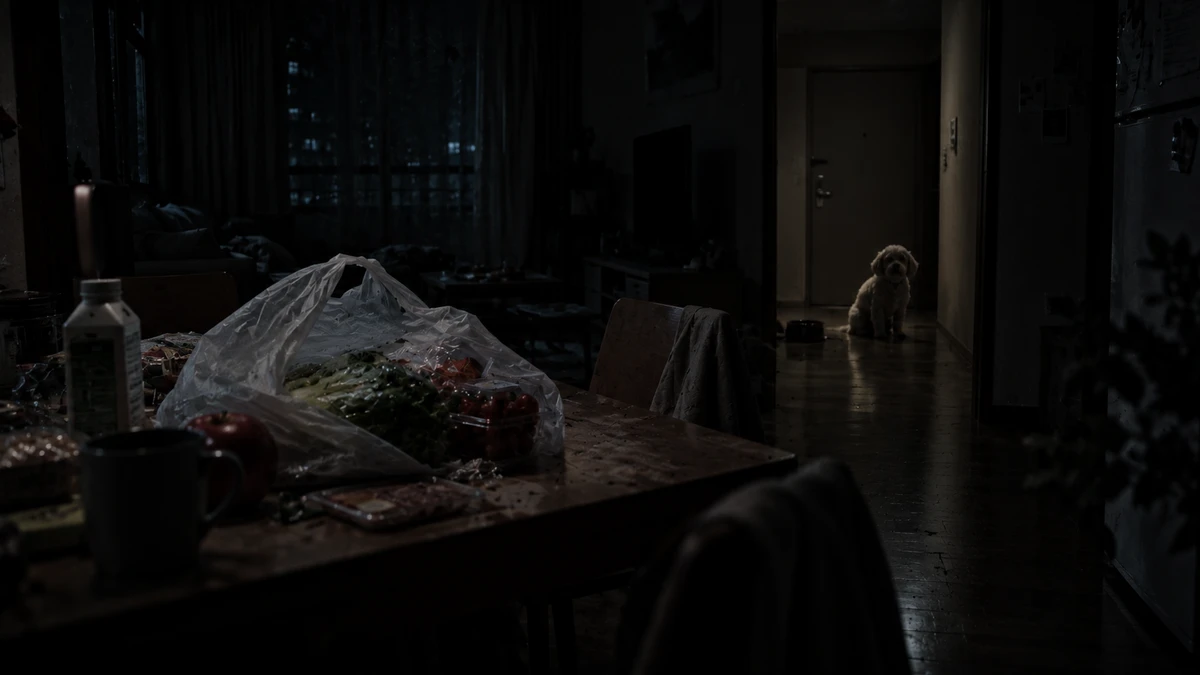
At first the police did not move. A tidy flat, no blood, the car still there, the door intact: nothing in that flat looked like anything had happened. A week passed, and there was still no word, so the police reclassified it as a criminal case, began pulling the camera footage, and began tracing the phones.
When they got to the phones, things became stranger still.
The message that came three days after they vanished
The people were gone. The messages were not.
On 28 May the wife did not turn up at the theatre, with a performance coming up. She had not said a word beforehand.
On 29 May a colleague from the theatre rang her phone, and the husband answered, and said his wife could not come to work for a while. That same day the husband’s phone sent a message to his business partner at the restaurant: “There is a matter I have to resolve. I think I will be away for a month or two.”
On 30 May the wife’s phone sent a message to the head of the theatre company: “In my condition I do not think I can perform. Like last time, I had an accident and I am in hospital again. For a while I will not be able to answer any messages. I am sorry.”
Two messages, to two different people, and underneath they said the same thing: we will be out of reach for a while, do not think anything of it. The people who received them took them, at first, at face value: some trouble at home, a while away, nothing to worry about. But the theatre people kept turning it over. She was not someone who dropped a show at the last minute, and the tone of those lines was not hers. Her family and the theatre people rang her phone again and again, and not once did they reach her. Every time, it was the husband who picked up. On 31 May they rang his phone instead, and he answered, and said his wife was in hospital, that she could not take calls, that she could not perform, and hung up.
When the police checked later, no hospital anywhere had a record of her. No consultation. No admission.
On 2 June the husband’s father received two words from his son: “I’m fine.”
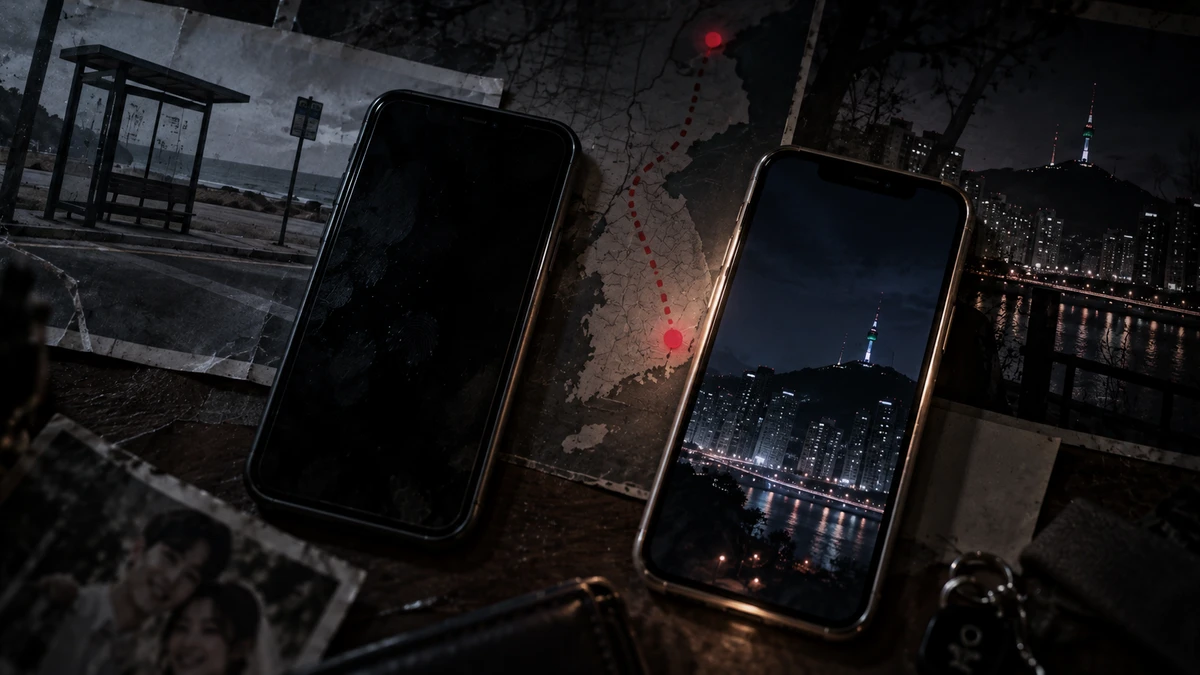
That same day the two phones each gave off a final signal. One of them at around nine in the morning, at a bus stop in Gijang, Busan. The other at around ten at night, in Cheonho-dong, Seoul. The two places are more than three hundred kilometres apart.
After that, neither phone ever gave off a signal again. No calls. No record of leaving the country. No card payments, no cash withdrawals, no hospital that had ever seen them, and in the three years that followed, not a single person who had seen them with their own eyes. Who typed those lines, who picked up those calls, only the lines themselves know.
On the wedding day, the bodyguards were there for one person
Before this couple ever married, there was someone who did not want the wedding to happen.
The wife’s friend said later that before she married, the wife had been receiving phone calls. The caller was a woman, the husband’s old flame, someone he had known since high school, on and off for years, who by then was living in Norway. She was the first person he had ever loved, and years later she would be the one name the police could not cross off their list. The police later established that when word reached her that he was getting married, the calls began, and the messages, to him and to her, and as the wedding drew closer the words got heavier, and some of them were threats on her life. The wife’s friend remembers what was said: “I will never accept the two of you getting married. If you marry, I will tear everything down, and I will not let you be.”
The friend remembers that the wife changed her name to get away from those calls, and changed her phone number, and the calls still found her.
The friend also remembers the wedding day: there were bodyguards at the venue, the husband had hired them, and the person they were there for was that woman.
In today’s language, that is a stalker ex. The police found that after the wedding the husband stayed in contact with her.
Then there is what the police found. Two weeks before the couple vanished, the woman came back to South Korea from Norway. She told no family, no friends. She slept in motels and in jjimjilbang, the bathhouses where Koreans stay the night, she paid in cash and never by card, and in two full weeks in the country she left not one record behind her. A week after the couple vanished, she left, two weeks earlier than her ticket said.
Perhaps for those two weeks she was in this city. Perhaps she saw them. Perhaps not. The police sent her written questions about what she had done during her stay, and the answers that came back were vague and contradicted one another. They asked her to come back to Korea and explain. She did not come. As the investigation closed in, she hired a lawyer in Norway, and then she dropped out of sight.
A hundred possibilities, and the one that was left
In March 2017 the police asked Interpol for a red notice. In August, she was arrested in Norway.
The detective in charge of the case put it this way afterwards: “We investigated every possibility. Out of a hundred, we checked ninety-nine of them, and the one that is left is her.”
In December 2018 a Norwegian court ruled that the direct evidence connecting her to the couple’s disappearance was insufficient.
Extradition refused.
She was released.
She says she never had a relationship with the man. She says she knows nothing about any of it. She says that if anyone was threatened, it was her. She still lives in Norway.
In March 2019, two years and ten months after the disappearance, the police opened a public investigation and printed the couple’s photographs on missing-person posters. The wife’s photograph had been public for a long time. The husband’s was only added that year: his parents had believed all along that their son would come back on his own, and had not wanted his face on a poster, and it took them three years to agree. The posters went out onto the streets. Nobody came forward to say they had seen them.
The hands that typed
In those few days, someone used her phone to type “I am in hospital again,” and someone used his phone to type “I’m fine.”
Ten years on, the police, a court and two families have not been able to say whose hands typed those words.
And where the two of them are now, nobody knows either.