Dig Up the Mound That Looks Like a Grave, and All Five Frog Boys Will Be There
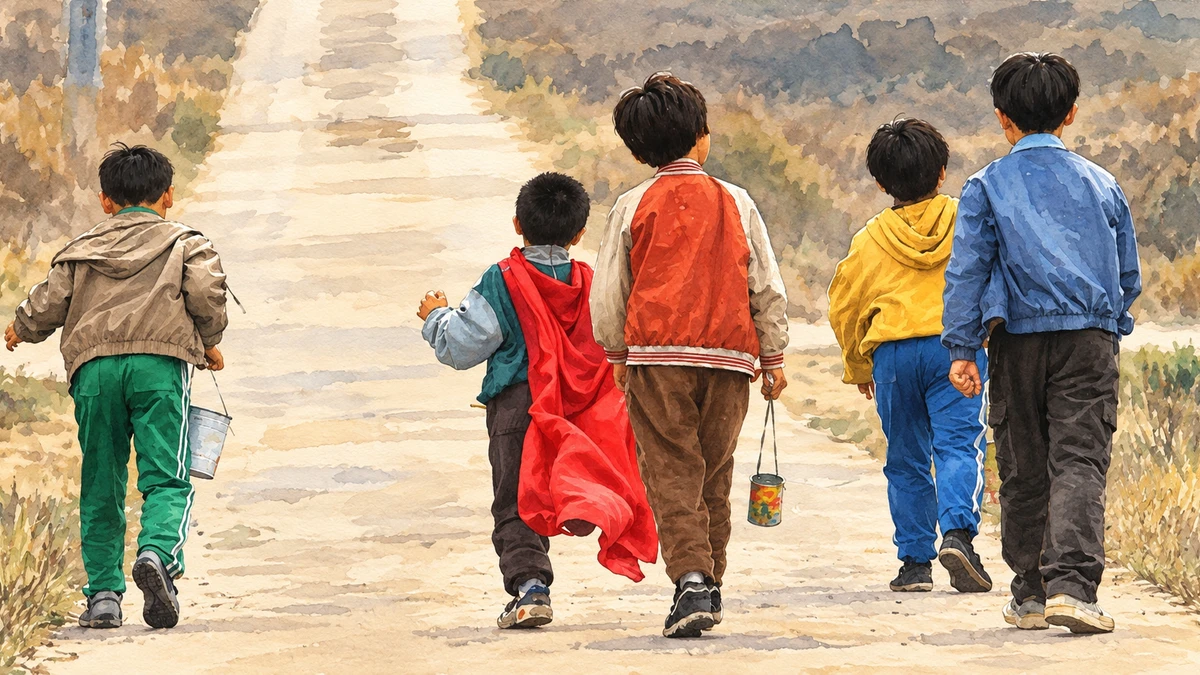
In Daegu, South Korea, behind the homes of Dalseo District, there is a low hill called Waryongsan. It is under three hundred metres high, and it does not take long to walk up from the bottom. It is recorded that a dragon once came out of the pond at its foot, which is how the hill got its name. Beside the pond there was an army firing range. In spring the local children went up the slopes to collect salamander eggs and to pick spent shell casings out of the dirt. It was their playground.
In March 1991, five boys walked up that hill and did not come down.
Eleven and a half years later, a man who would not say who he was phoned a newspaper and said only one thing: go up that hill and find a mound that looks like a grave, dig it open, and all five of them will be inside.
He was right.
The Empty Tins
On 26 March 1991, South Korea held its first local council elections in thirty years, and the whole country had the day off.
At eight that morning the eldest of the boys was already looking for his jacket, and his father had meant to take him along to vote. Thirty-five years later, the father still remembers the morning his son went out: “He was looking for his jacket from eight o’clock. I asked him where he was going, and he said he’d just go out and play for a bit and come back. And he never came back.”
The five went to the same primary school, lived in the same neighbourhood and were like brothers. The oldest was thirteen, the youngest nine. There had been six children playing together that morning, but one of them went home for breakfast and never caught up; he was the only child who went home that morning. The other five set off. Some remember them carrying empty formula tins and sticks. Others remember each of them holding a plastic bottle or a big milk carton, something to put the salamander eggs in. Later reports turned the salamanders into frogs, and that is how they came to be known as the Frog Boys.
Where the path starts up the hill they ran into one boy’s older brother and said they were going to look for salamander eggs. That was the last thing anyone heard them say.
Later, someone said they saw the boys at the bottom of the hill at nine that morning. Someone else said noon. Someone said that at two in the afternoon they were still heading up the hill. After that, nobody saw them again.
Two Screams at Half Past Eleven
The five of them were not the only ones on the hill that day.
Another boy from the same school lived in the army housing at the foot of the hill. That morning he went up too, tagging along with a few older neighbourhood boys, down into the valley to look for salamander eggs.
At about half past eleven, he heard a scream from somewhere higher up the hill, sharp and urgent. About ten seconds later there was a second one.
But the older boys who were in the valley with him said afterwards that they had heard nothing at all.
Nobody has ever been able to say who made those two sounds. Two of the missing boys’ mothers later said that at around half past eleven that morning, each of them felt a tightening in her chest, a feeling neither could put a name to.
By six in the evening, not one of the five boys had come home.
The Hill They Searched Forty-Eight Times
The parents went up the hill first, and at ten to eight that evening they called the police. Police and parents searched the slopes until three the next morning. They found nothing.
When day broke, the police decided the boys had run away. The eldest had written in his diary: “When I grow up I want to be the leader and go exploring.” That one line was enough to convince the police that all five had run off together, and the search turned away from the hill, first to the whole of Daegu, then to the whole country.
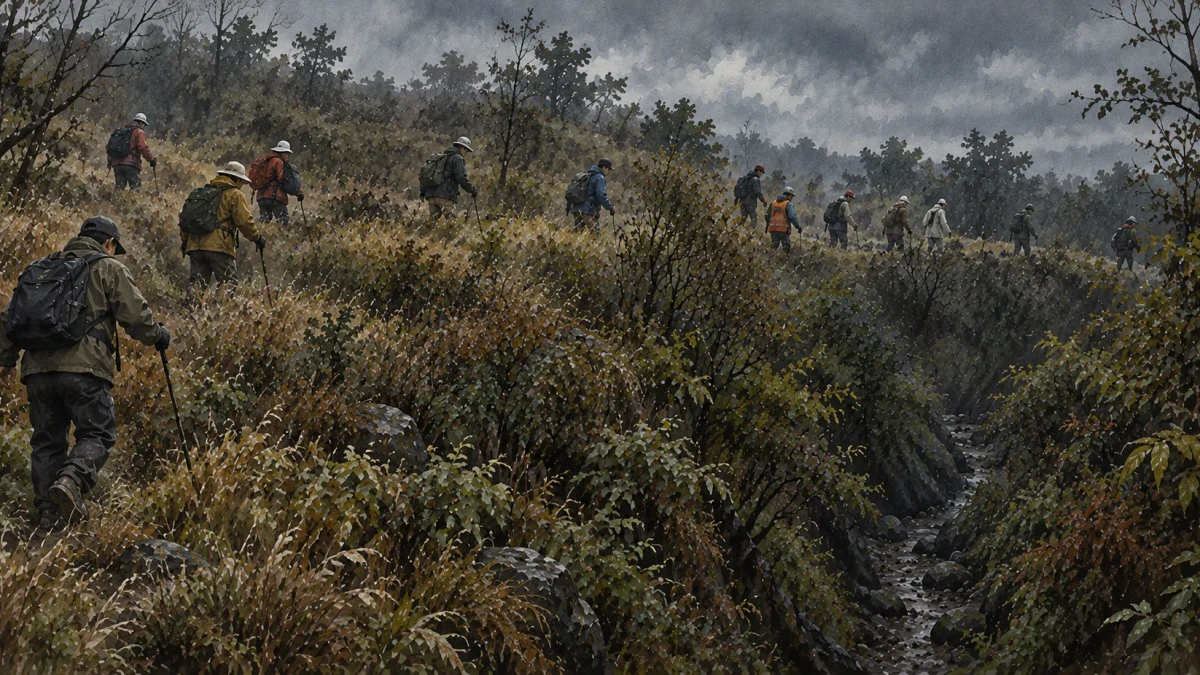
Yet the hill was not left alone either. The president issued a special order. Soldiers and police went out more than three hundred thousand times in all, and that one low hill, under three hundred metres high, was searched forty-eight times.
Two and a half years later, in September 1993, the five families announced they were giving up the search. In January 1996, acting on a claim, the police brought in an excavator and dug up the bathroom and bedroom floor in one of the boys’ own homes. There was nothing underneath. That same year the task force was disbanded, and the number of officers on the case was cut to ten.
People who followed the case from the start later explained why. The search lines set off up the hill shoulder to shoulder and pushed upwards step by step, but somewhere on the way they broke up into single file; and the spot where the boys were eventually found had never been searched at all, because nobody imagined children could have got that far.
So forty-eight searches of the hill and more than three hundred thousand searchers, and not one of them walked into that gully.
The Man on the Phone
It was half past four on the afternoon of 25 September 2002, and by then hardly anyone talked about the five boys any more. In a newspaper’s newsroom, the phone rang.
The caller was a man. He sounded to be in his early forties.
He said: “Go to Waryongsan in Daegu. The bones of the five Frog Boys are buried there. Go and check now.”
Then he said: “When you get there, you’ll find a trace like a big grave. Dig it open, and all five sets of bones will come out just as they are.”
He said the same thing over and over for three or four minutes. When the reporter asked how to reach him, he hung up.
At half past eleven the next morning, a man gathering acorns halfway up the hill looked into a gully and saw a skull and clothing in the earth.
Eleven and a half years earlier, the boy in the valley had heard the screams at half past eleven in the morning, too.
The place was on the same hill, not far from the valley where the boys had last been seen. The five sets of bones lay tangled together at the bottom of the gully, and next to them were five pairs of children’s shoes, tracksuits and a child’s wristwatch. The man who found them said there were signs that someone had heaped stones and earth over the bones, and that the heavy rain that summer had washed the soil away and uncovered them. People who later studied the aerial photographs said that from that gully you could see the motorway, and you could see the lights of people’s homes.
The man on the phone had the place right. He had the number right. He was right that the five were buried together. When he made that call, no one had found them yet.
The police tried to trace where the call had come from and who had made it. They never found out. How he knew, nobody knows to this day.
The Knot Behind the Back
According to the head of a volunteer group for missing children, who rushed to the scene, the police did not wait for the forensic team after the report came in. They took picks and shovels and dug out the first four sets of remains themselves, and only the last was left for the specialists.
The five skeletons were tangled together, and the clothes lay over their faces.
On the last boy to be dug out, the top was knotted behind his back, and his trousers were tied as well. The police said he must have felt cold, pulled his clothes over his head and tied the knot himself. The families said someone had tied him.
Not a single hair was found in the pit, and many of the teeth were missing. The families believe the boys did not die there, and that they were moved there after they were dead.
In the earth beside the bones there were bullets and shell casings, and two of the bullets were among the remains. When they were examined, no blood was found on them.
Two days after the remains were found, the police told the press that the boys had got lost on the hill and died of the cold.
A little over a month later, the forensic pathologists who examined the bones gave a different answer. At least three of the five skulls bore injuries made by an outside force, inflicted at the time of death, and the eldest boy’s skull alone carried twenty-five of them. As for the weapon, the pathologists suggested some kind of square-headed screwdriver, and also a sharp tool whose tip was shaped like a squared-off U. To this day no one knows what it was.
Five boys, the oldest thirteen, the youngest nine. How does one person stop five children from running? And if it was more than one person, who were they? Why were the clothes laid over their faces? Why was the knot tied behind the back?
The Note in the Flowers
The fifteen-year statute of limitations ran out in March 2006. From that day on, even if whoever did it were found, there would be no way to convict them. In 2019 the police reopened the case and had the bones and the soil examined again. There is still no answer.
Every March the families go back up the hill. One year the memorial was held in the gully where the remains were found, starting at eleven in the morning. Thirty-five years on, the families still cannot bear to hear the word “election”. They say they have spent these years living like people in hiding, because they did not want to hear anyone say that they had lost their children and could still laugh.
People often leave flowers at the spot where the remains were found.
The eldest boy’s father is seventy-seven now. Every time he goes up the hill, he stops in front of those flowers and looks carefully through them, one bouquet at a time.
“Maybe whoever did it will write a note and leave it there,” he says. “Don’t you think?”
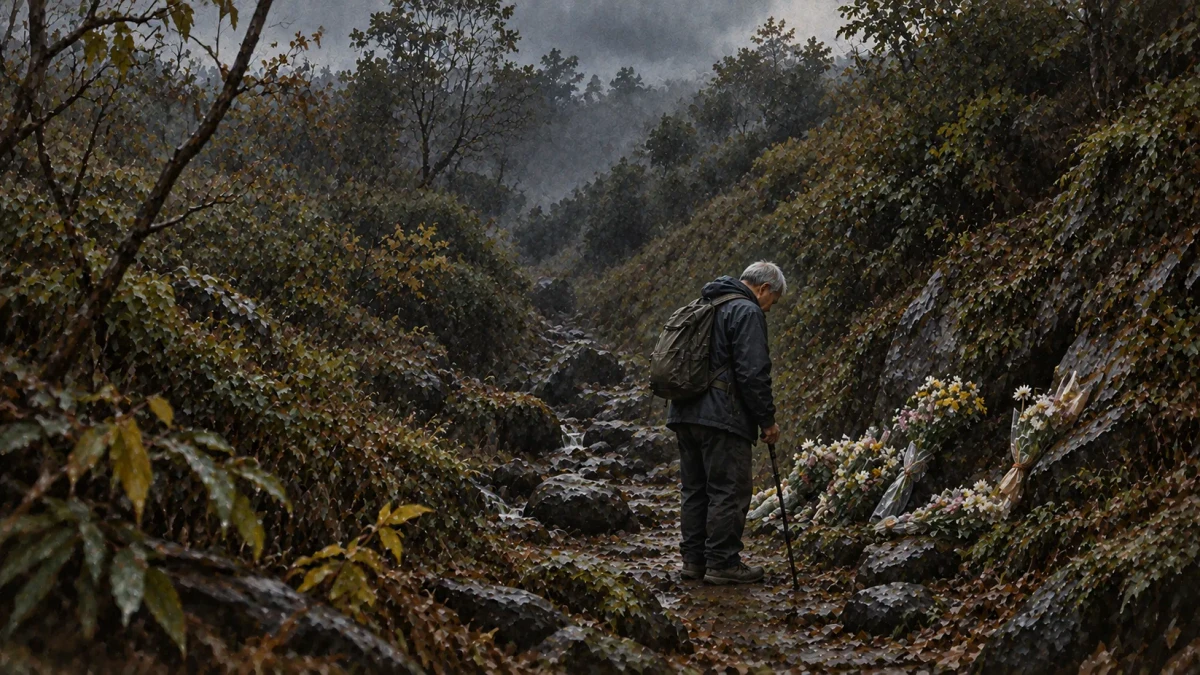
He is not looking for flowers. He is looking for a person, someone who knows what happened on that hill that morning, why the clothes were laid over their faces, why the knot was tied behind the back.
In the gully that more than three hundred thousand searchers never reached, someone once covered the five boys with stones and earth; eleven and a half years later, a man on the phone described exactly where that gully was. Whoever did these things has never been found, and perhaps they are long gone, or perhaps, every March, one of them is standing among the people with their heads bowed beside the gully.