The Notes on the Desk — Taiwan's Hualien Five Children Case
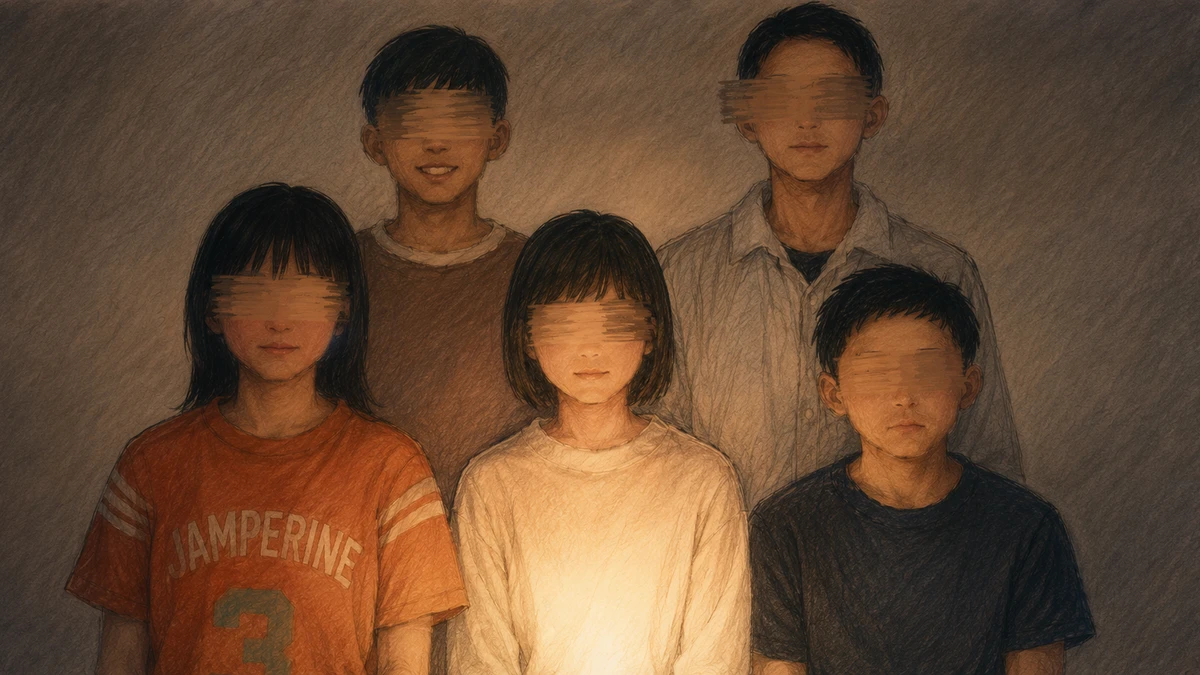
September 2006. In a lane off Jichang First Street in Ji’an Township, Hualien County, Taiwan, a narrow row house had gone quiet. Teachers from the children’s primary school knocked on the door two days running — home visits, no answer. The neighbours began to notice a smell they couldn’t place, thicker every day. On the afternoon of 8 September, police were called, and broke the door open.
In the bathroom lay five children.
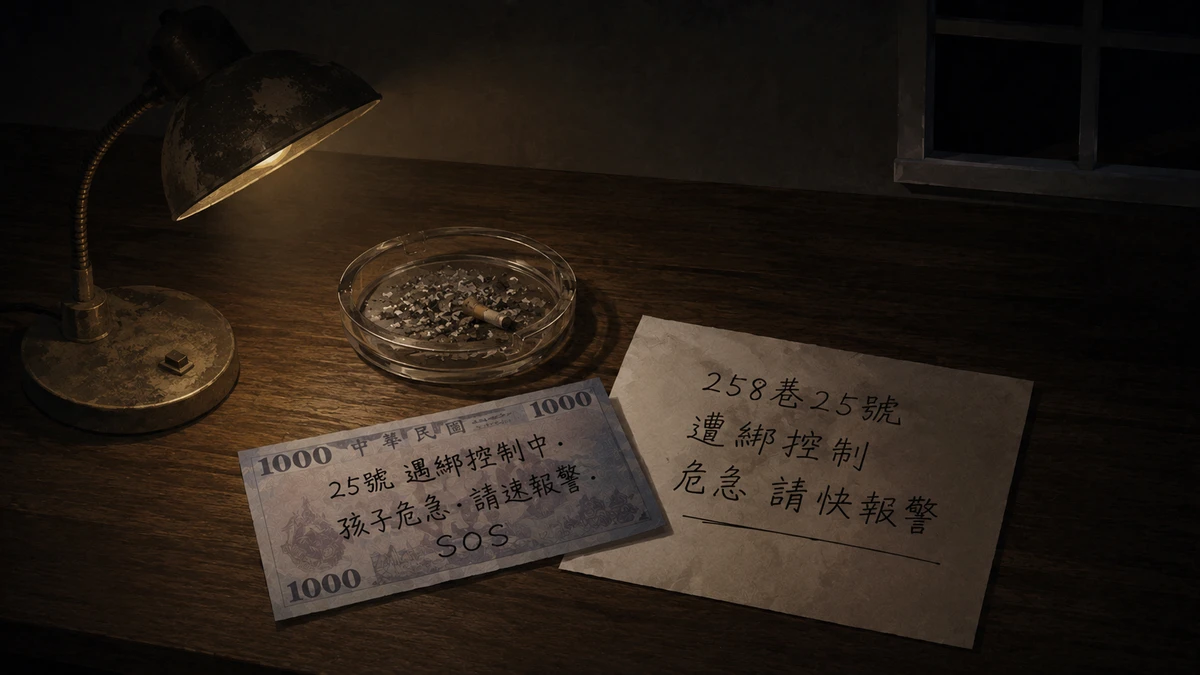
On the living-room desk, pressed under an ashtray, lay thousand-dollar banknotes with writing on them: “No. 25. Being held. The children are in danger. Call the police. SOS.”
This is the Hualien five children case — the family annihilation that became modern Taiwan’s most ghost-tinted unsolved mystery.
The door locked from the inside
The first thing the officers noticed was the doors. Not one lock had been forced — the house had been locked from within. The rooms were far too quiet. The air felt half-set, and the smell clung to the back of the throat, heavier with every step, the kind that raises the hair on your arms. Every door intact, every window shut — and something in that house deeply, unmistakably wrong.
The smell led to the bathroom. Every gap around its door and window had been sealed over with tape, wrap after wrap, turning the room into an airtight box. Behind the door, the five children lay stacked together in a way that made no sense, fully and neatly dressed. Their hands and feet were bound behind them with wire; beige packing tape wound across their faces, over the eyes, the nose, the mouth; some had black plastic bags over their heads, and wire looped around the neck. They had suffocated.
They were the five children of the house. The eldest son was 18, a university freshman who had just been admitted. The second son was 17, in his last year of high school. The elder daughter was 15, just starting junior high. The younger daughter was 12, in third grade. The youngest boy was 9, in second grade. The two youngest were pupils at the primary school in Ji’an — it was their empty desks that had sent the teachers to the door, twice, before anyone called the police. The forensic examination put the deaths between 4 and 5 September — three to four days before the police came through the door.
The parents — Liu Chih-chin and Lin Chen-mi — were not in the house.
The pleas nobody heard
On the desk in the ground-floor living room, the pleas for help were written on two kinds of surface: plain paper, and thousand-dollar bills. The message was the same: “No. 25. Being held. The children are in danger. Call the police. SOS.” One note spelled it out further: “Lane 258, No. 25. Under someone’s control. Urgent. Call the police.” It even gave the house’s own address — as if a family of seven were being held hostage, and the adults had scrawled a coded plea whenever their captors looked away.
But later reporting kept snagging on the details. The handwriting was neat. No panic in it. And the ashtray pressing down the banknotes sat one step from the window — if someone was truly being held, truly trying to reach the outside, why not throw the note out of the window, instead of squaring it away on the desk, where no one would see it until the door came down?
And in the record, there was another version of events that would not fit the word “hostage” at all.
The fingerprints that shouldn’t be there
Forensic technicians lifted fingerprints from the tape that had been wound around the children — and, against all expectation, they belonged to Liu Chih-chin. The father of the house.
On 4 September he had shown his face at his own company and told the staff he was taking the kids to Taipei for an operation — he’d be away for a few days. At half past eleven on the night of 5 September, he went to a hardware store, bought a pair of needle-nose pliers, and drove off. On the evening of 6 September, a neighbour saw the couple for the last time, taking out the rubbish.
Then came the days after the children were found. Reporters later pieced the trail together: on 11 September, Liu Chih-chin was seen near Ji’an railway station — and that same day, a rent payment went out from Lin Chen-mi. Other records note the couple was later seen driving near Hualien railway station, apparently moving freely. After that, their car was abandoned, and the couple evaporated from the island.
The notes said they had been taken. Yet the fingerprints, the pliers from the hardware store, and everything about the couple’s movements afterwards said the story was not that simple. Two sets of records, side by side, contradicting each other — and the only people who could explain had disappeared. In November of that year, police issued a wanted notice for the parents.
Nine years of thin air
In the years that followed, the police worked every direction there was.
The money: Liu Chih-chin owed more than ten million Taiwan dollars; reports said he had gone alone to invest in mainland China and lost nearly eight million. The grudges: a former business partner who had once threatened to kill Liu’s whole family was investigated. A cigarette butt from the scene came back with DNA — it belonged to a friend of Liu’s, but the friend, too, was eventually ruled out. The manhunt: at one point officers staked out the hills of Zhiben and found no one. Lead after lead, everything came to nothing.
In the years no one could find them, every kind of claim rushed into the silence. A self-proclaimed spirit medium told the media that Liu Chih-chin was alive at a children’s home run by a church, and that Lin Chen-mi was already dead. The weekly magazines of the day put the word “haunted” straight into their headlines, wrapping the case in one more layer of mystery.
And the house stayed empty, and the case stayed open, and nine years went by.
Two skulls on the mountain
On 10 June 2015, a township-office worker went hunting on Ciyun Mountain in Hualien County and stopped in the undergrowth — two human skulls, long since gone to bone. The spot was about two kilometres in a straight line from the house on Jichang First Street.
Then the DNA results came back: it was Liu Chih-chin and Lin Chen-mi, missing all those years. Empty pesticide bottles lay at the scene; the forensic examiners concluded that was what had killed them — more than seven years earlier, with no trace of foul play. Which meant that not long after the children died, the parents had died too — on a hillside two kilometres from home. For nine years, the whole of Taiwan had been looking for them. They had been on Ciyun Mountain all along.
On 11 September of that year, the Hualien District Prosecutors Office closed the case: the evidence pointed to Liu Chih-chin and Lin Chen-mi in the killing of their five children, and since both suspects were dead, no charges would be brought. The prosecutors’ reconstruction ran: a failed business, debts in the millions, no way out — so they took the five children with them. No trial would ever test that account. The only two defendants were bones on a hillside.
That is where the record ends. What the record does not answer outweighs what it does.
A digital camera recovered from the house had no memory card in it — but technicians later restored several frames from its internal flash memory. Investigators concluded that Lin Chen-mi had held the camera, and that the frames showed Liu Chih-chin binding the children; the elder daughter’s fingers were laced tightly together, her body bent — not the posture of someone drugged unconscious. Yet the drugging itself never held up: the toxicology tests on the children found no sedatives, no sleeping pills. In the garden grew Taiwan derris — a plant that can be used to poison fish — and the reports found no clear trace of that either. Without drugs, how does one man subdue five children, two of them teenage boys of seventeen and eighteen? And if the couple had already resolved to die with the whole family, who were those two neat notes written for? Even Liu Chih-chin’s old stint in an intelligence agency was dug up and added to the list of doubts.
The prosecutors’ finding is written in the closing decision. But the questions are written nowhere.
The house the rumours never left
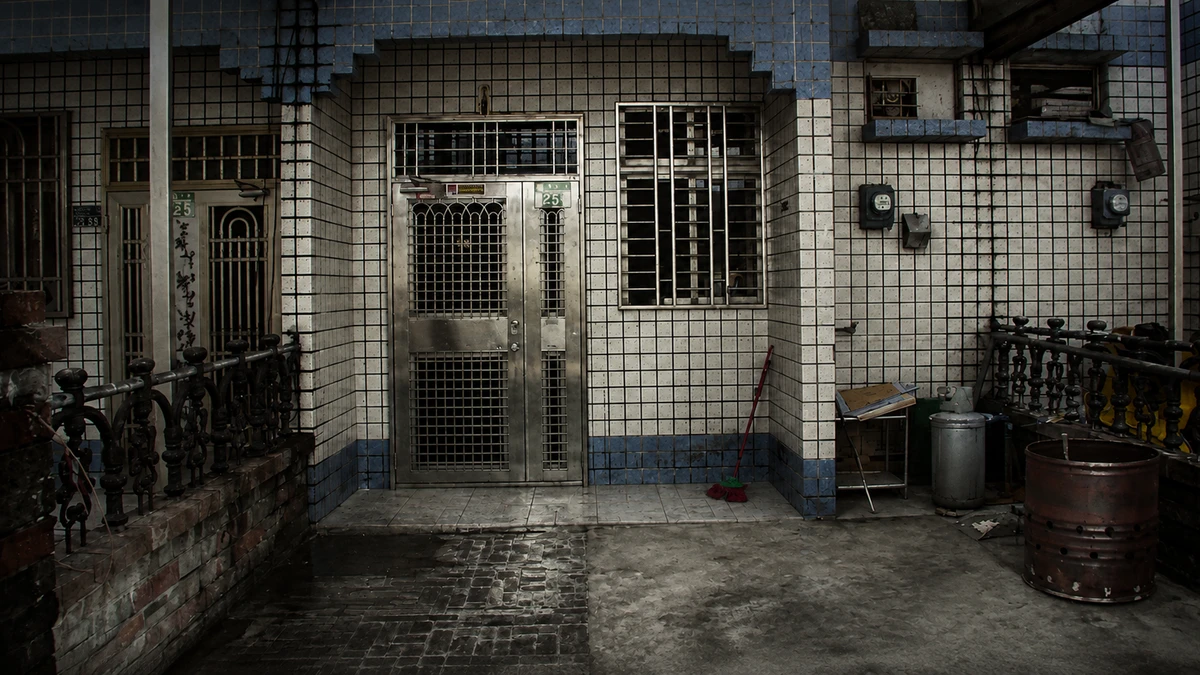
The case was closed. The story wasn’t.
The house became one of Hualien’s most notorious haunted addresses, and the press has gone back to it every few years since. The Taiwanese outlet Mirror Media wrote that on the night before the bones were found, five nightjars landed on the house and cried terribly. The man who found the skulls, the reports went on, began dreaming of pale figures chasing him; another article said his home grew restless, his children often crying in the night.
The account that travelled furthest came from a university student who had once rented the house. He told the media that every night he saw a small boy standing beside his bed, saying: “Big brother, this is my room.” The same wave of stories had a neighbour dreaming of the Liu children.
No one has stayed long. Reporting over the years says a handful of tenants moved in, and each of them soon moved out.
The talk grew loud enough that the county police chief of the day did something police chiefs do not usually do: he moved into the murder house and lived there for seven days — to kill the rumours in person, and to hunt for an inspiration the case files hadn’t given him. Seven days later, the case was still unsolved. The rumours were still alive.
The case has since been adapted more than once — an episode of the TV procedural 廉政英雄, the 2017 television film 九月四日 (“September 4th”), an instalment of a 2026 Disney+ series. The titles keep changing. The story stays the same.
And in the lane off Jichang First Street, the house is still standing — waiting for the next tenant who won’t stay long.