Nine People Walked Into the Magistrate's Guardhouse in Taoyuan, and Eight Never Came Out
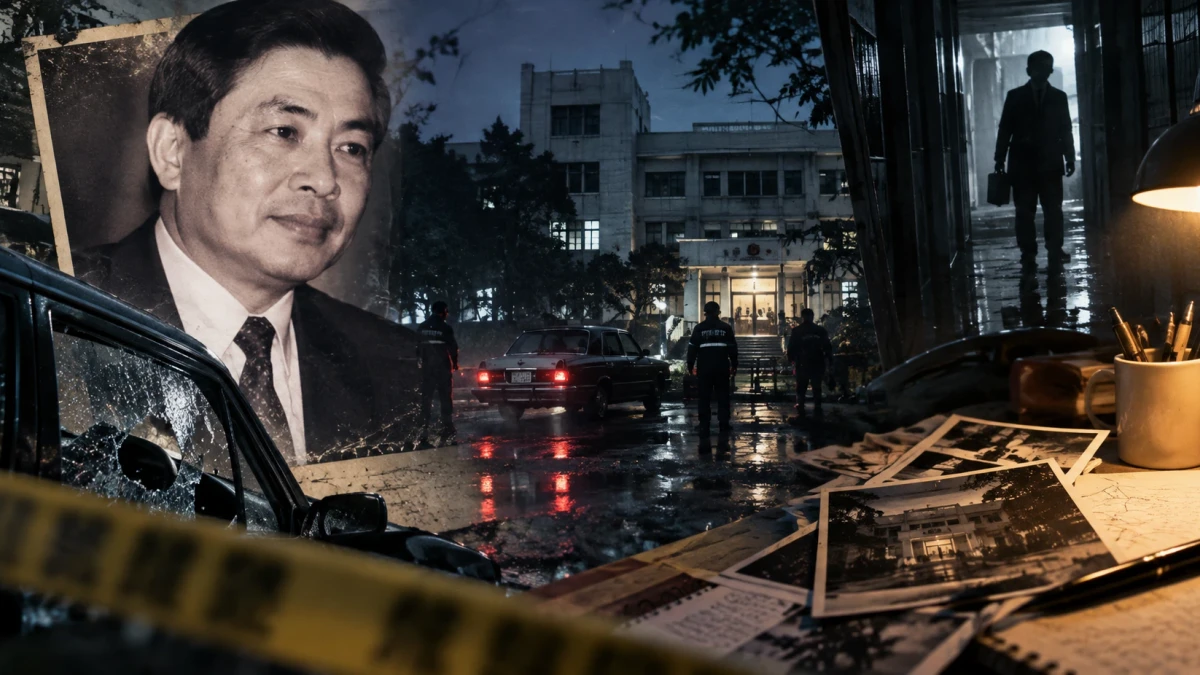
In Taoyuan, Taiwan, on Xianfu Road, next door to the county government building, stands a two-storey house. It was the official residence of Liu Pang-yu, the magistrate of Taoyuan County at the time. Just inside the gate was the guardhouse, a room of less than two ping, about six and a half square metres, with a desk and a telephone, and the guard lived in it.
On the morning of 21 November 1996, nine people were taken into that guardhouse. Eight of them never came out.
It was the magistrate’s official residence, so every magistrate who came after him should have moved in. Not one of them would. The house was left empty, and the people who lived around it said the telephone inside rang at night, and that someone had counted eight dead cats beside the guardhouse.
A man sitting in the guardhouse
The night before the killings, the three dogs in the residence started barking at two or three in the morning, toward the guardhouse, and kept it up until nearly dawn. The magistrate’s wife said afterwards that she had put it down to the guard having friends over.
It was drizzling when it got light. At half past six the Filipino maid went out to the gate for the newspaper. The gate was standing half open, and in the dim guardhouse a man in a suit was sitting. She took him for the driver, arriving early. When the magistrate’s wife got up, she rang the guardhouse to ask about the night before, and the guard answered in a flat, tired voice that a friend had come by.
For the next two hours, people came and went through the residence as they did every morning, and not one of them realised there were two strangers inside the guardhouse.
At half past seven the magistrate’s private secretary came into the kitchen with a pot of chicken stewed in rice wine, then went out and asked the maid for a cup of tea in the living room. When she brought it out, the living-room lights were off and he was gone. At ten to eight the director of the county public works bureau returned a call to the residence. The man who answered said the magistrate had already gone out. It was only afterwards that the director realised what had been wrong. The guard always answered the residence phone with “Residence, hello.” That morning the man who picked up said only “hello”.
Just before eight the driver arrived and went to wait for the magistrate in the guardhouse. At eight the magistrate came downstairs, drank a glass of juice and walked out of the living room. In the kitchen, the maid and the local housekeeper heard him talking to someone in a very angry voice. The housekeeper went out to see. She did not come back.
The magistrate’s daughter came down next. Through the dining-room window she could see her father’s car still parked outside, and no sign of him. On her way out she passed the guardhouse. The door was shut and the light was off, and she assumed the guard was still asleep. She usually left her car key in the guardhouse, but she had come home too late the night before and kept it on her, so that morning she never opened that door.
The magistrate’s office rang the residence twice looking for him, and both times the same unfamiliar voice answered. The first time it said the magistrate had gone out. The second time it said he was on his way to the council. Only later did the office staff realise that the voice had referred to one of the magistrate’s old friends by his bare name. Nobody in the residence would ever have done that.
A friend of the magistrate’s wife arrived to see her and walked in. Two county councillors walked in through the gate. At a quarter past eight the relief guard walked into the guardhouse. By then there were nine people inside that room of less than two ping: the guard who had been on duty, the private secretary, the driver, the magistrate, the local housekeeper, the wife’s friend, the two councillors, and the guard who had just come on shift.
Then came a string of gunshots.
Through the kitchen’s glass doors the maid saw one man walk out through the gate, and a second man follow him carrying a bag. She ran to the guardhouse and looked in. Several people were lying on the floor, one on top of another.
The two hours behind that door
When the staff from the magistrate’s office arrived, nothing looked wrong from outside. The magistrate’s car was there. The secretary’s car was there. They looked in through the guardhouse window, and then they opened the door.
In a room of less than two ping, nine people lay on the floor, one across another, in a rough circle, every one of them with tape over the eyes and mouth. The ambulances came within ten minutes, nine of them. The councillor nearest the door was carried out first. When the tape came off, he had a pulse. The other eight had no signs of life by the time they were brought out. One of the guards had handcuffs on his wrists and a mark on his neck where a knife had been pressed. A reporter who covered the case later passed on what the examining prosecutor had said: the faces of the eight were faces of terror.
There was one gun in the whole residence, the guard’s service pistol. The pistol and its ammunition were gone, and police concluded it was the gun the killers used. A photograph of the magistrate had been left on the floor, and police took it to have been brought along to identify him.
The magistrate’s daughter saw a closed door on her way out. The staff from the office saw a closed door on their way in. Nine people walked in one after another and not one came out. The people outside heard nothing but the magistrate’s raised voice, and nobody thought anything was amiss. What happened in those two hours, only nine people know. Eight of them are dead. The one who lived was shot through the head, and when he woke up he remembered none of it.
Nobody could find them
The killers drove off in one of the councillors’ cars. The councillor’s secretary was sitting in it at the time. They drove her up Hutou Mountain and let her go. All she came away with was a name: one of the men had called the other “Number Three”. The car was found parked by a road near the mountain. Two men had got out of it, and nobody ever saw them again.
That morning 2,500 police officers across Taoyuan County were stopping cars on the roads. Three days later the police released a sketch and put up a reward of twenty million Taiwan dollars. Every man in Taiwan who went by “Number Three” was brought in and questioned. After that came more than twelve hundred leads, more than thirty thousand people checked, more than ten million fingerprint comparisons, and eight directors-general of police.
The former head of the Criminal Investigation Bureau said afterwards that when he could not sleep he would drive around near the residence. He knew it was superstition, but he kept thinking the dead might give the task force some kind of hint. He drove that road many times, and the dead never once came to him in a dream.
How the two men got in, why these nine people, why not one of them was spared: there are no answers. The twenty-year limitation period ran out, and the killers still had not been found.
The telephone at night
After the residence was left empty, the neighbours started hearing the telephone.
It rang in the middle of the night, out of a house with nobody in it, and it rang and rang, and it was loud.
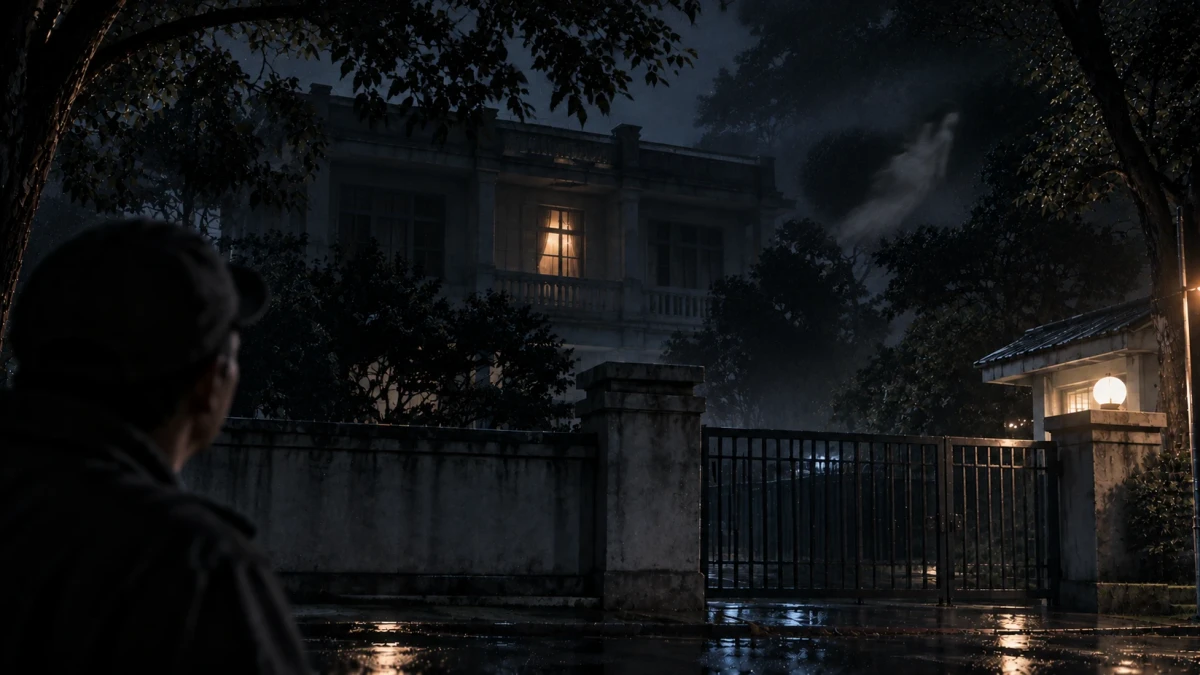
On the night of the first anniversary of the magistrate’s death, someone passing the house saw the second-floor lights flickering on and off, and heard that telephone again.
Some nights the whole house was lit up, long after it had been abandoned. Someone saw a man in a suit cross the yard and walk into the house. On the morning of the killings, what the maid had seen sitting in the guardhouse was also a man in a suit.
In the days right after the killings, people burned paper money at the gate. On a hot, windless day a whirl of wind rose off the pile, and it was cold. A reporter who covered the story said his cameraman lifted the camera to shoot the residence, and the moment he raised it, it stopped working. He lowered it and checked it and it was fine. The reporter pressed his palms together, faced the house and explained why they had come, and when the camera came up again, it ran.
A man who lived nearby said he stood at the roadside a little after one in the morning and watched a white shadow inside the grounds, “just drifting, drifting, at forty-five degrees, until it went into the trees and vanished”.
Later the cleaners went in to clean the place, and beside the guardhouse they found eight dead cats.
Eight people. Eight cats.
It stops at every floor
Seven years after the killings, the residence was torn down. A place nobody else dared to live in was given to the police. The magistrate of the day said a police station could hold the place down. A police building went up, three levels below ground and eight above, the building known today as the Taoyuan City Government Police Building. The guardhouse where eight people had lain became a flower bed, and the director-general of police sent over a carved wooden Guan Gong a hundred and ninety centimetres tall to stand in the building, in the hope that the stories would stop there. One of the construction workers said the work had gone smoothly enough. He said so with a protective charm hanging on his back. He was human, he said, so how could he not be afraid.
In January 2008 the police moved in. In those first days one of the lifts kept breaking down. Officers burned paper money for safety, and the smoke set off the fire alarm.
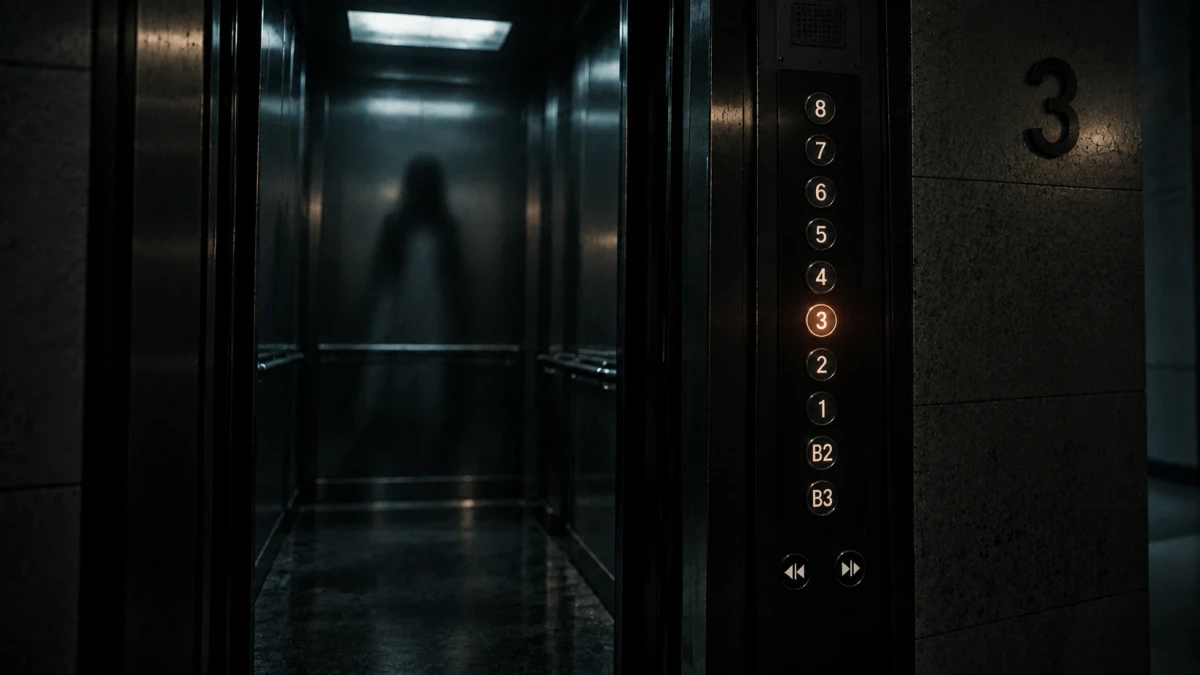
Everyone who has worked in the building since knows not to take the two lifts closest to where the killings happened. You press the button and they often do not come. People have even been trapped inside. Plenty of people would rather climb the stairs all the way up from the third basement. What the detectives say among themselves is different: the lift nearest the spot where the residence’s living room used to be cannot be controlled. It stops at every floor.
In April 2014 a man being held in the building on a drugs charge asked to use the toilet, slipped his handcuffs, ran for the window and jumped from the eighth floor.
The flower bed is still there, and police officers walk past it on their way to work every day. The lift closest to it stops at every floor, and at every floor the doors open.