The Nanjing University Dismemberment: The Cleaner Took the Bag of Meat Home to Wash, and Washed Out Three Fingers
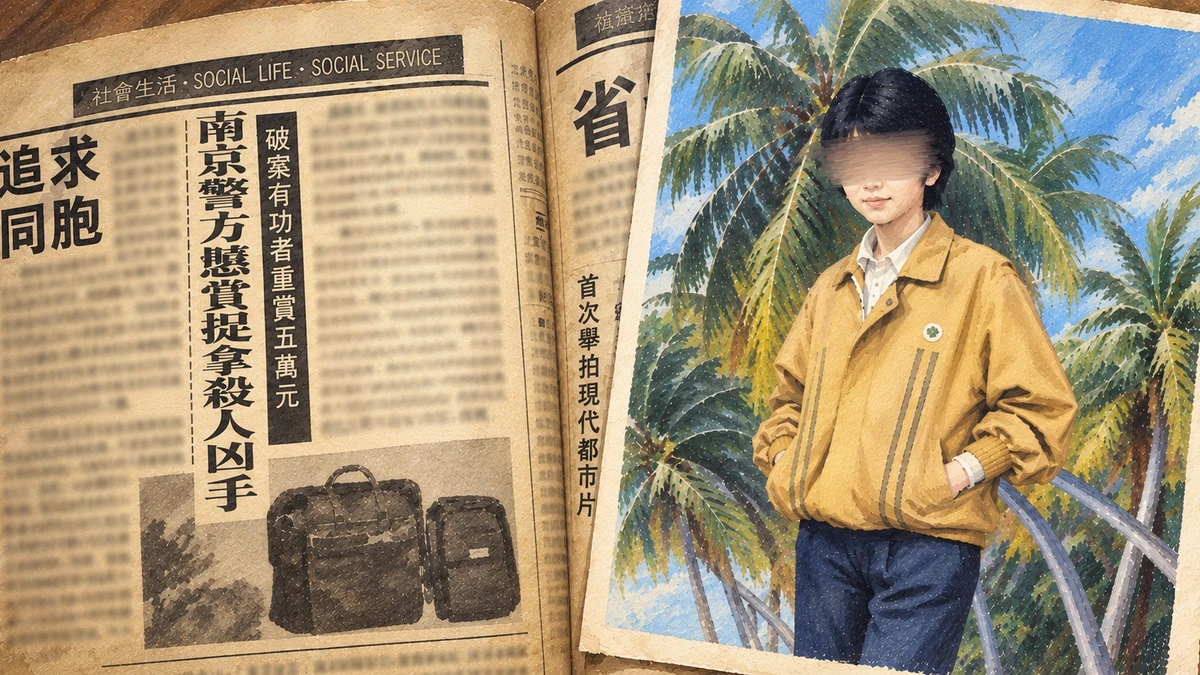
In January 1996, heavy snow fell on Nanjing, in Jiangsu Province, China.
The snow that year covered the whole city. The lowest temperature was minus four, and the streets went quiet, as if the city had put its sounds away and was holding its breath. Hankou Road cuts through the Gulou campus of Nanjing University and splits it in two, classrooms to the north, dormitories to the south, and in the south block stands the old Dormitory Four. Outside the gate is Qingdao Road. A few streets further south is Xinjiekou, the busiest shopping district in the city.
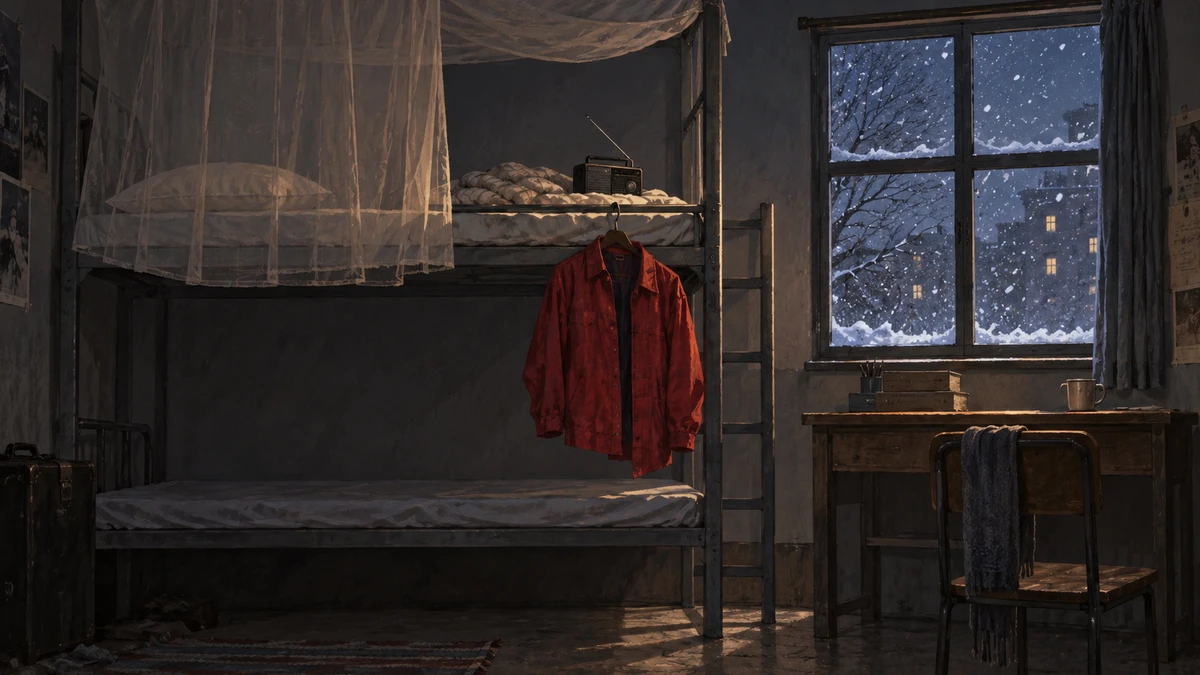
An upper bunk in Dormitory Four belonged to a nineteen-year-old called Diao Aiqing. She came from a farming village in northern Jiangsu, and three months earlier she had arrived in Nanjing for the first time in her life, enrolled in a full-time adult-education diploma course. Her school friends remembered short hair, single-fold eyelids, glasses when she read or wrote, a slightly hoarse voice, and not many words. She liked to lower the mosquito net around her bunk and read inside it, or switch on a small radio and sing along under her breath. She could not ride a bicycle. All the way through school her father had carried her on his, with her on one side and her luggage on the other. The family was poor and clothes passed from the elder sister to the younger. The red coat she was wearing that winter was the first thing her sister had ever bought with her own wages, worn for two or three years, then handed down.
It had taken her two attempts at the entrance exam to get into Nanjing University. She was the family’s hope.
She had been a student in Nanjing for a little over a hundred days when she was killed.
The evening she left clutching small change
One evening in early January, after supper, she walked out of the university gate on her own.
Someone in her dormitory had been caught using a hotplate against the rules. The whole room was fined, and as the dormitory monitor she had to pay her share though she had never used it. Her father later guessed that she felt wronged and went out to walk it off. A student saw her leave the gate with small change clutched in her hand, as if she meant to buy something nearby. The last person to see her saw her on Qingdao Road, beside the campus. She was wearing the red coat.
After that, no one saw her again.
The upper bunk stayed empty for a night, for two nights, for a week, and no one in the dormitory told her family, and neither did the university. By the time the telephone call from Nanjing reached her home, ten days had passed since she left the campus, and by then the police had already found pieces of her body by a road in the city centre.
The bag of meat
On the morning of 19 January the snow stopped.
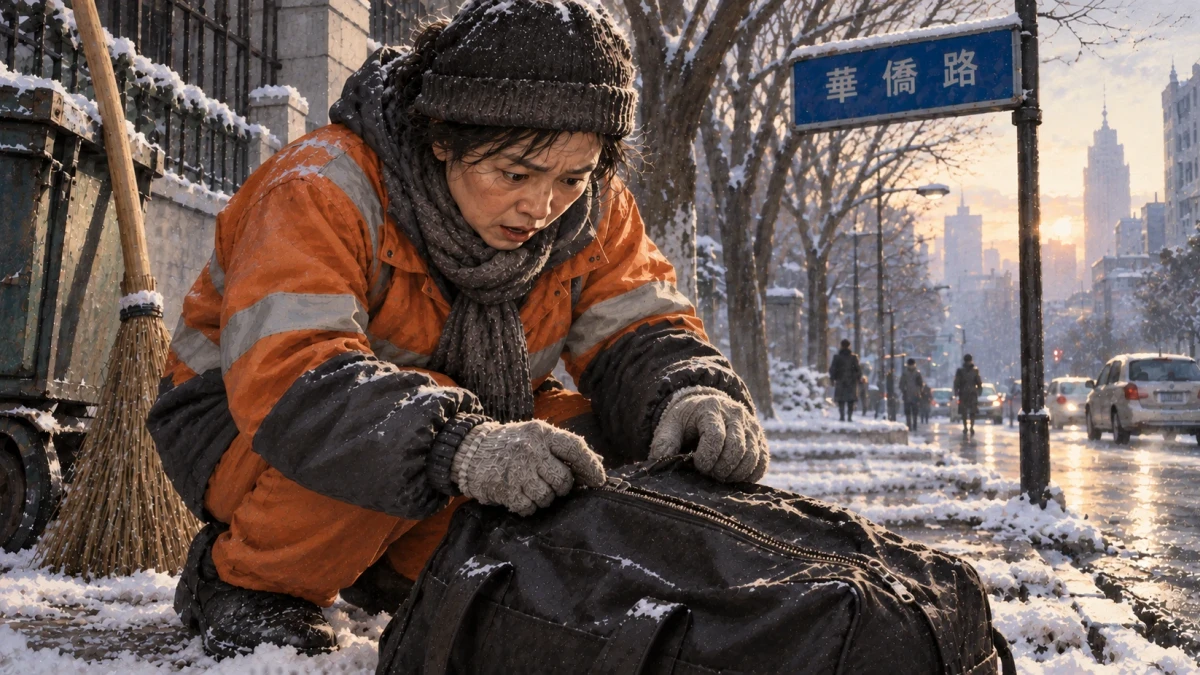
Huaqiao Road is in the centre of Nanjing, a few streets from Xinjiekou. At first light a street cleaner was out sweeping as usual when she picked up a handbag from the roadside. She opened it. Inside was meat, slice after slice, cut small and cut evenly, cooked, every edge neat.
She did not think much of it. Perhaps she could not bear to see it wasted, a whole bag of cooked meat left by the road, so she took the bag and carried it home to wash.
Halfway through the washing, she washed three fingers out of the meat.
Three human fingers, mixed in with the slices.
She went to the police, and that was only the first bag.
Over the following days bag after bag turned up in the busy streets of Nanjing, five or six places in all, the police counted afterwards, most of them where people came and went all day. A travel bag of imitation leather printed with the two characters for Guilin and a picture. A pillow-shaped bag of imitation tendon. A denim rucksack with a China Travel Service label sewn on. And a printed bedsheet.
The police counted the pieces one by one and reached more than two thousand. Every piece was small and every piece was neat, the hands and feet severed cleanly, and the officer who handled them said, many years later, that he had never seen a case like it. There was no DNA testing that year. The pathologists could only say, from the body hair and the muscle fibre, that this had been a woman.
A few days later, around Shuizuogang, the police found her head and her clothes, and only then could the body be pieced together.
One person, cut into more than two thousand pieces, boiled, packed into three bags and a bedsheet, and left on the busiest streets in Nanjing for a street sweeper to carry home and wash.
The identification notice
On the afternoon of 19 January a farming family in Jiangyan, in rural Jiangsu, took a telephone call from Nanjing University. Their younger daughter was missing. The father set off for Nanjing the same day, the first time in his life he had been there. What the elder sister remembers is the snowy night, six police cars driving into the village and taking the whole family to Nanjing before morning. At the Huaqiao Road police station the family was put in a meeting room, and it was the brother-in-law who first read the words on the blackboard: “1·19 dismemberment and dumping case”.
In the university guesthouse the police brought out a copy of the Yangtse Evening Post. In the gutter between the columns was a small notice asking the public to identify a body. It said that on 19 January an unidentified female body had been found in the city: about twenty years old, about 160 centimetres tall, of medium to slim build, with thick eyebrows, a black mole on the right cheek, and a black mole the size of a mung bean beside the right earlobe.
The brother-in-law said later that every detail in the notice matched her exactly.
It was then that her mother remembered the mole. That mung-bean-sized mole beside her daughter’s right ear, she had once asked her about it: how come you have a mole on your ear. Her daughter had answered: “So you can recognise me.”
The family asked to see her one last time. Someone from the public security bureau talked them out of it. It was too cruel, he said, even the officers on the case could not eat meat. What the police told the family was that the body had been cut into more than two thousand pieces and that the head had been boiled too. For four days the mother cried without stopping and the father did not shed a single tear, and the sister said he looked as if he had been struck dumb. On the fourth day the family was sent back to Jiangyan and told to go home and wait for news.
They have been waiting for thirty years.
She has no grave. To this day her family has never seen her remains. The police took her books and everything she owned from the house in the village, her dormitory room at the university was emptied out, and she disappeared from the world like that, leaving nothing behind for her family.
Everyone in the city was a suspect
Almost every police officer in Nanjing was put to work.
Some were pulled into the task force. Many more went door to door in their own districts, in what the police called a human-wave search. Anyone who had been at a dumping site, anyone who had emptied rubbish into those bins, was found and questioned one by one. The task force moved onto the campus of Nanjing University and every member of staff was interviewed. They checked your registration, they checked your history, they asked what you had been doing over those weeks. Anyone with a mark against him was held longer, and one man was questioned for a week straight. A sixty-year-old caretaker who lived alone on the campus became a priority. Four or five officers came to his rooms and went through his kitchen and his toilet.
Every piece had been cut so small and so neat, so for a time the police decided they were looking for a doctor or a butcher, and went through everyone in both trades. The bags had all been dumped close to the campus, so the police reasoned that he lived somewhere nearby, and had very likely carried the bags out on a bicycle. To the faculties the police gave the shape of the man they wanted: a single man, young or middle-aged, physically strong, with a room of his own, with a stove and knives, someone whose love life had gone wrong, with a paranoid streak.
The police showed the faculties three or four photographs, all of her. One was of the coat she had been wearing, red check with a black lining.
The university sealed its west side gate. At night the girls went out in groups and came back from evening study in groups. Word went round the campus that whoever did this went for girls in red coats with short hair, and that year the girls of Nanjing stopped cutting their hair short.
The police issued a reward notice, fifty thousand yuan, and made the three bags and the printed bedsheet public, in the hope that someone would recognise them. The notice went up, and the case stayed unsolved.
After three months the task force withdrew from the university. Three months of investigation had turned up no lead worth the name. Where she was killed, where she was cut up, where she was boiled, to this day no one knows.
Thirty years
Life went on and the thing was not spoken of. It became the family’s forbidden subject. If the television happened to land on a crime drama, the whole family fell silent.
In 2008 a post on an internet forum dragged the case back into the light. The whole country was guessing who had done it, and in the end the person who wrote the post was himself taken for a suspect. The police stepped in, the thread was deleted, and the discussion stopped dead. That summer the Nanjing police turned up again at the factory where her father worked and took a sample of his blood for DNA testing, the first time in the twelve years since the case began.
On 19 January 2016 someone wrote online that this was the last day of the case’s twenty-year limitation period, and that from today the killer had officially walked free. The next day the criminal investigation bureau of the Ministry of Public Security posted a reply: “This is a case already under investigation by the public security organs. The police will pursue it to the end according to law and will never give up.”
Her sister, when a reporter asked, said that if the killer repents in his heart, if he is sorry, the family forgives him.
The red coat
When her mother walks down the street now and sees a girl in red, she cannot help looking twice, and for a moment she thinks her daughter has come back.
When her sister went to Nanjing to ask the police how the case was going, she heard someone singing for money on the street and crossed the road on purpose to look. Maybe it’s my sister. Up close it was a middle-aged woman holding up a sign.
A school friend had a letter from her, still unanswered when the police came for evidence and took it away. It was signed “Little sister, 5 January 1996”, a few days before she walked out of the gate.
Thirty years on, whoever killed her has never been found. Perhaps that person left Nanjing long ago. Perhaps that person never left, and on some street in the city has passed her mother going the other way.