In Setagaya, He Killed a Family of Four and Then Stayed in Their House
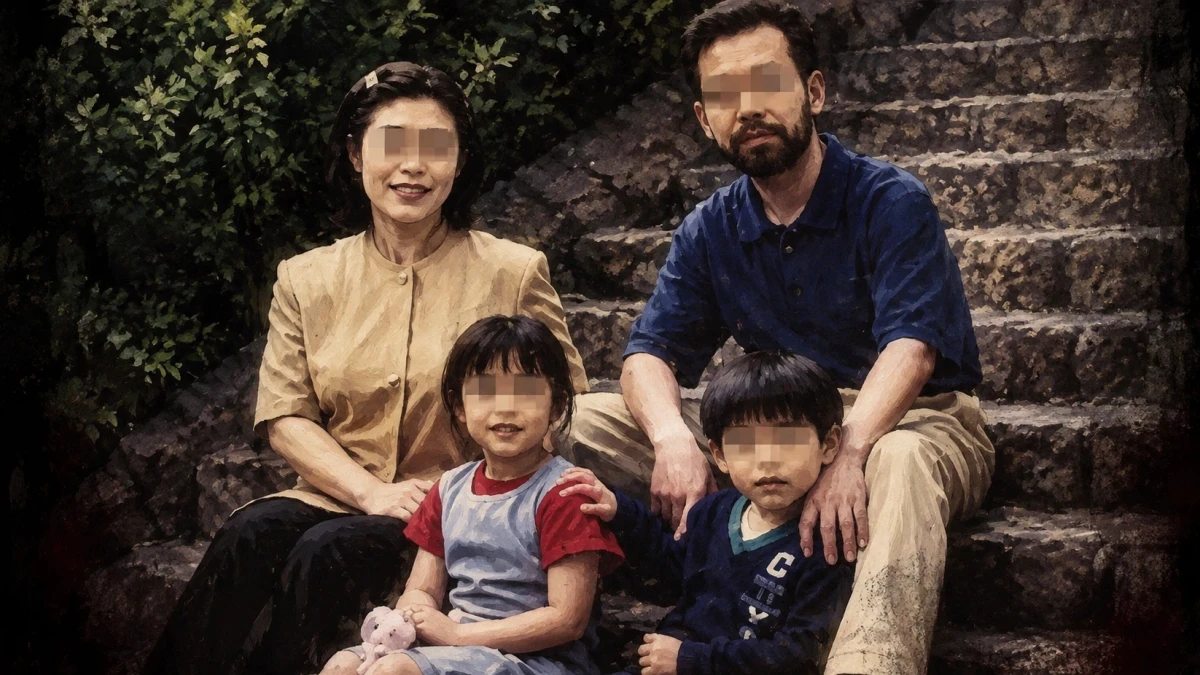
In Setagaya, Tokyo, Japan, on the edge of a park that was being expanded, a neighbourhood that had once been home to two hundred households was down to just four by the winter of 2000. A baseball ground lay to the north and a small river ran to the west, while the park’s trees filled the other two sides. Once night fell, almost no one walked the road past their doors.
One of those four families was due to move out in three months, but they never lived to see that day.
Late on 30 December, someone climbed into that family’s house. When they were found the next morning, all four were dead. Yet the man who did it left behind his fingerprints, his blood, his hat, his scarf and a handkerchief that may have hidden his face. He left so much in that house, and not one thing could tell anyone who he was.
What sends a chill down the spine, though, is not how he got in. It is what he did after the killings.
The Night the Phone Cord Was Pulled
That evening, the family of four went shopping together on the shopping street by the station, came home, ate dinner and turned on the television. It was an ordinary evening at the end of the year.
The park’s metal fence ran right beside the house. On the mezzanine floor there was a bathroom, and in it a small window more than three metres above the ground. The police later concluded that late that night someone climbed the 1.8-metre fence from the park side, got his hands on the window frame and squeezed through that small window into the house.
On the ground floor, the cord of the telephone had been pulled out of the socket. The police say it may have been done to delay the discovery of what had happened. So that night, even if anyone had called from outside, the phone in that house would never have rung.
That night, the husband, the children’s mother, an eight-year-old girl and her six-year-old brother never made it out of the house.
After that night, the only person still alive in the house was the killer who had climbed in.
He Opened the Fridge
The killer did not run. He stayed.
His hand was injured and bleeding. He used the family’s towels and other things to stop the bleeding. Then he started going through the house. Bankbooks came out. Cash cards came out. A whole drawer was pulled from the cupboard.
Then he opened the fridge and drank barley tea. He took ice cream from the freezer, and he did not use a spoon. He crushed each cup in his hand and squeezed the ice cream out through the top, and when one cup was finished, he reached for another.
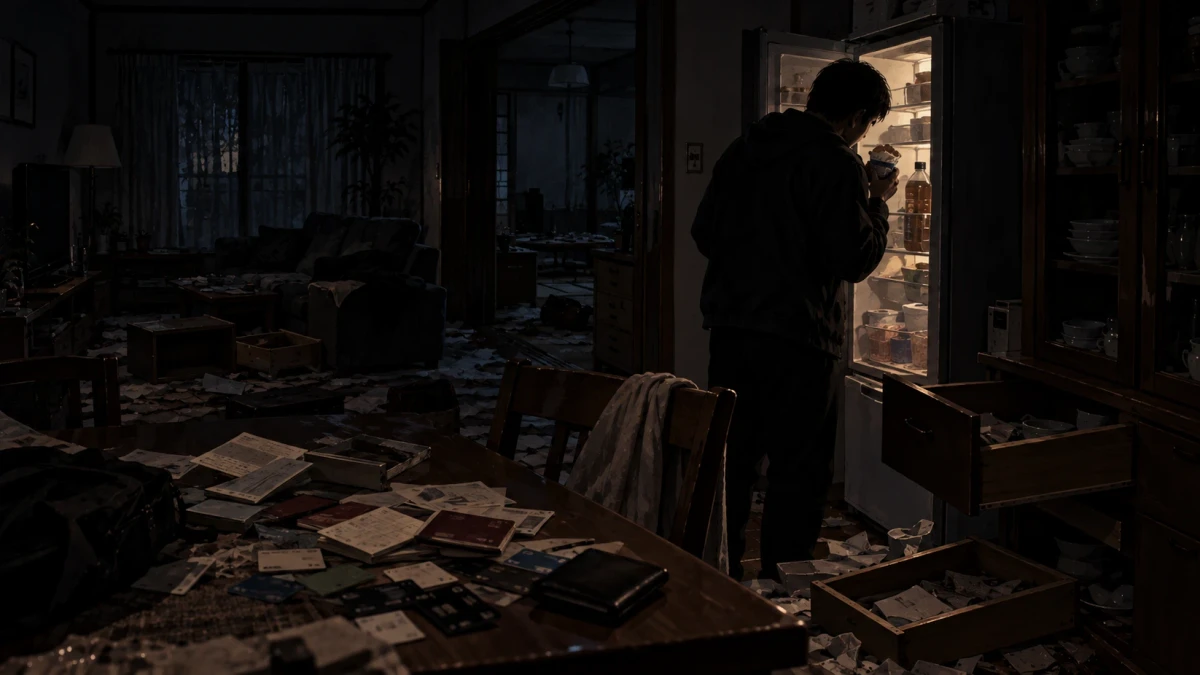
Late in the night, the computer screen in the ground-floor study lit up. He switched on the husband’s computer, went online and opened the website of one of Japan’s big theatre companies, the kind of site that shows musicals and sells tickets. Only a few minutes later, the screen went dark again. A man who had killed a family of four sat in that family’s study, looking at a theatre company’s web pages.
Then he took off his bloodstained top, went into the upstairs living room, put one of the family’s cushions under his head and lay down.
For those hours, as on any other night, hardly anyone came down the road past the door, and no one outside had any idea what had happened inside that house.
He fell asleep there, while the family of four were still in the same house.
When the Grandmother Knocked
The next day was 31 December, the last day of the twentieth century.
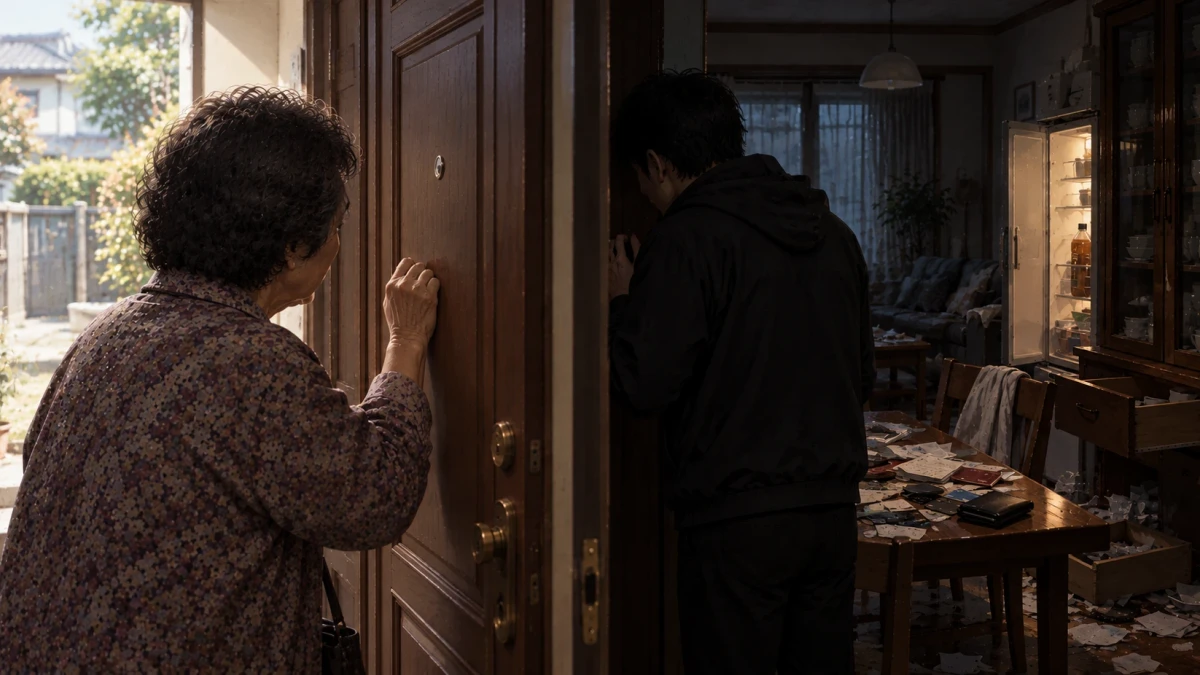
Some time after ten in the morning, the grandmother who lived next door came to the family’s door and knocked.
Was he still on the other side of that door?
A detective who worked on the case believes he was. By his account, the man stayed in the house for about eleven hours and slept until morning, and it was the knock at the door that startled him into running, leaving a house full of his belongings behind.
The police once thought so too. Only in 2014 did they change their view, saying he may have left in the middle of the night. Even now, no one can say for certain when he actually left.
That morning, it was the grandmother who found the family. When they were found, the front door was locked, the small bathroom window was open, and its screen had come off and lay nearby. Since the front door was locked, the police believe he climbed out through the same small window he had come in by.
If that detective is right, then that morning only a door stood between them. She was outside it, and he was still inside.
The Handkerchief Folded into a Triangle
He was gone, but he left a surprising amount behind. There was a grey knitted hat, a check scarf only 130 centimetres long, a black jacket and a pair of black gloves. There was a worn hip bag with sand still inside it, and in it two short hairs, one about two and a half centimetres long and the other only one and a half millimetres.
The top he took off in the house had a pale grey body and pale purple sleeves. It had only gone on sale that August. Just 130 were sold across the whole country, and only ten of those in Tokyo. Of those ten, the police traced only one buyer. They have spent twenty-five years looking for whoever bought the other nine, and they are still looking.
And there were two black handkerchiefs.
The first had a cut of about three centimetres in the middle. The police believe he threaded the cloth through the cut to make a pouch and slipped it over the knife handle, so that his hand would not slip when he held it. On the handkerchief that had wrapped the knife, investigators detected a French-made perfume.
The second had been folded into a triangle, and both ends bore marks that looked as if they had been twisted tight. The police say the killer may have used it to cover his face.
A face can be covered. Fingerprints and blood cannot, and he left both behind in that house. The fingerprints were taken. The DNA in his blood was identified. It seems like enough to piece a man together, yet in twenty-five years none of it has ever matched anyone.
On the Hundredth Day, a Jizo Across the River
The ninth of April 2001 was the hundredth day after the killings. That day, someone found a Jizo statue that had not been there before, beside the footpath on the far bank of the little river.
The statue was carved from white granite, about 59 centimetres tall including its base and weighing almost twenty kilograms, and a mark resembling the character 六 (six) was carved into its underside. It had been set down facing the house, gazing across the river at the place where the family had lived.
No one saw who carried almost twenty kilograms of stone to the riverbank. Did someone leave it there out of kindness, for the family? Or was it the killer, or someone connected to him? The police have spent twenty-five years on that question and still have no answer. In 2025 they once again asked the stone trade to help trace the statue, and one tip said the carving on a Jizo shown on a stonemason’s website looked very much like this one.
If he was the one who set that Jizo down, then a hundred days later he came back to that river and looked across it at the house.
Pencil Lines on the Wall
The house has never been demolished. It still stands in a corner of the park, with a fence around it, and after dark almost no one passes by.
On a snowy day in January 2020, the family’s relatives unlocked the rusted door and let a group of reporters in to see it. Everything inside had been packed by the police into cardboard boxes stacked in every room. In the ground-floor study, the room where that computer stood, the red and white hula hoop the girl used to play with still hung on the wall. The cupboard drawer was still pulled out, just as he had left it.
On the living-room wall are the pencil marks where the two children measured their heights. Beside the girl’s line, someone had drawn a little rabbit. The last line was drawn in November 2000.
No new line was ever added to that wall, and the man who once put his head on their cushion and slept in their living room is, twenty-five years later, still a man no one can name.