What Was Still in the Basement — The Connecticut Haunting
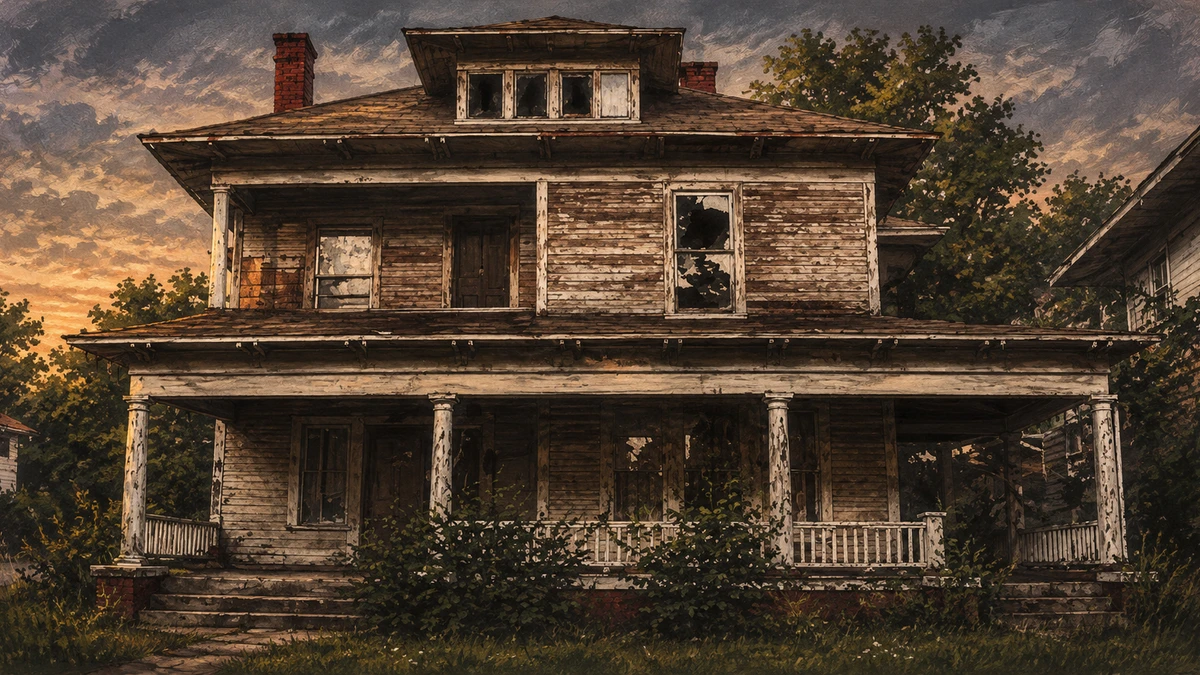
It is a white duplex. Clapboard siding, a deep porch across the front, a row of columns holding the porch roof up with the paint lifting and curling away from the wood underneath. The address is 208 Meriden Avenue, Southington, Connecticut. Walk up the hill from the front steps and you come to a cemetery.
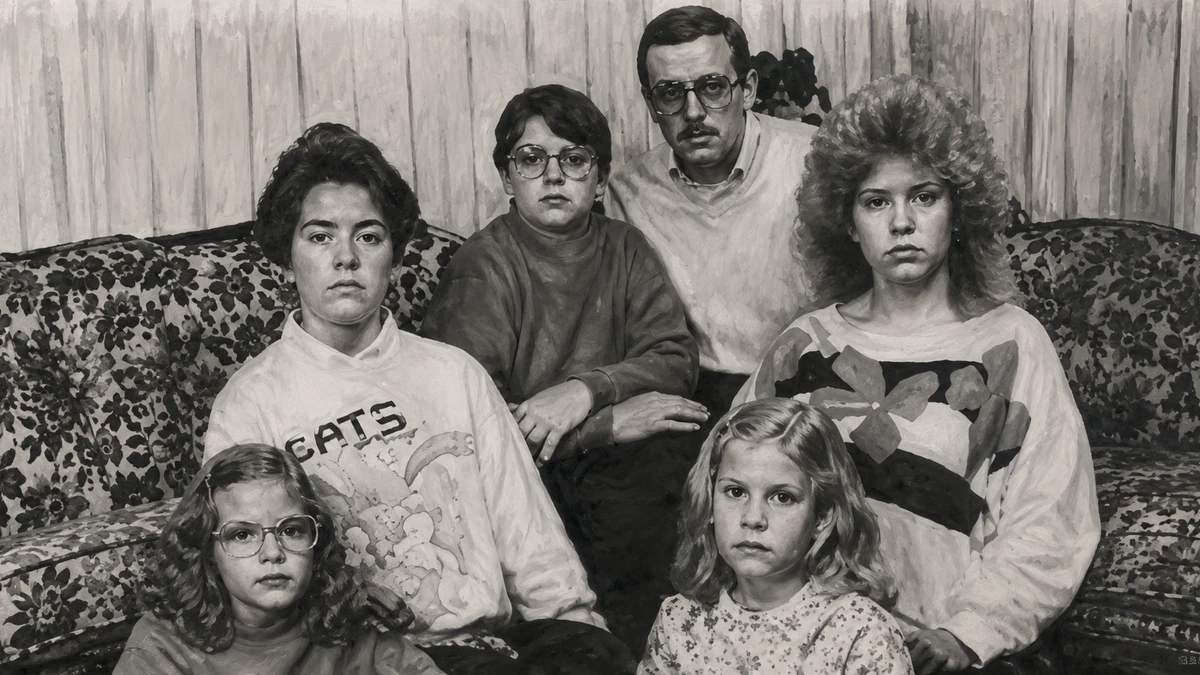
In 1986, a household of eight moved in.
The house was big — big enough for two adults, three sons, a daughter and two nieces. The rent was low. Lower than a house that size should have been.
Nobody asked why.
What they needed was a large cheap house
There was nothing romantic about the move. The eldest son was being treated for Hodgkin’s disease, and the treatment meant trips to the hospital, over and over. They needed to be closer to it. They needed somewhere everyone could sleep. They needed to be able to pay for it.
The house on Meriden Avenue did all three.
Moving week goes the way moving week always goes. Boxes stacked inside the door. An argument about who gets which room. Milk and bread into the refrigerator before anything else. Every house has a smell, made of old wood and dust and whatever the last people left behind. This one’s was stronger than most. But a big old house that has stood empty for a while always smells like something.
They went down to the basement last.
Nothing in the basement had been taken away
The first thing was a trolley.
Not the kind you move furniture with. Steel, on castors, with a single flat top and a lip running around all four edges — a very shallow tray. The lip is there so that liquid does not run onto the floor.
Further in, a rig was mounted under the ceiling. Cable, pulleys, a winch. It was bolted through the joists, and bolted hard, the way you bolt something that has to take weight. Coffin weight.
There were drains in the middle of the floor. More than one. The concrete sloped very slightly towards them from every direction, so that anything you hosed down would find its own way to the centre.
And then a drawer. Inside it, tags, stacked in neat bundles. Each tag had a length of string on it, and the string was exactly long enough to loop around a toe and knot.
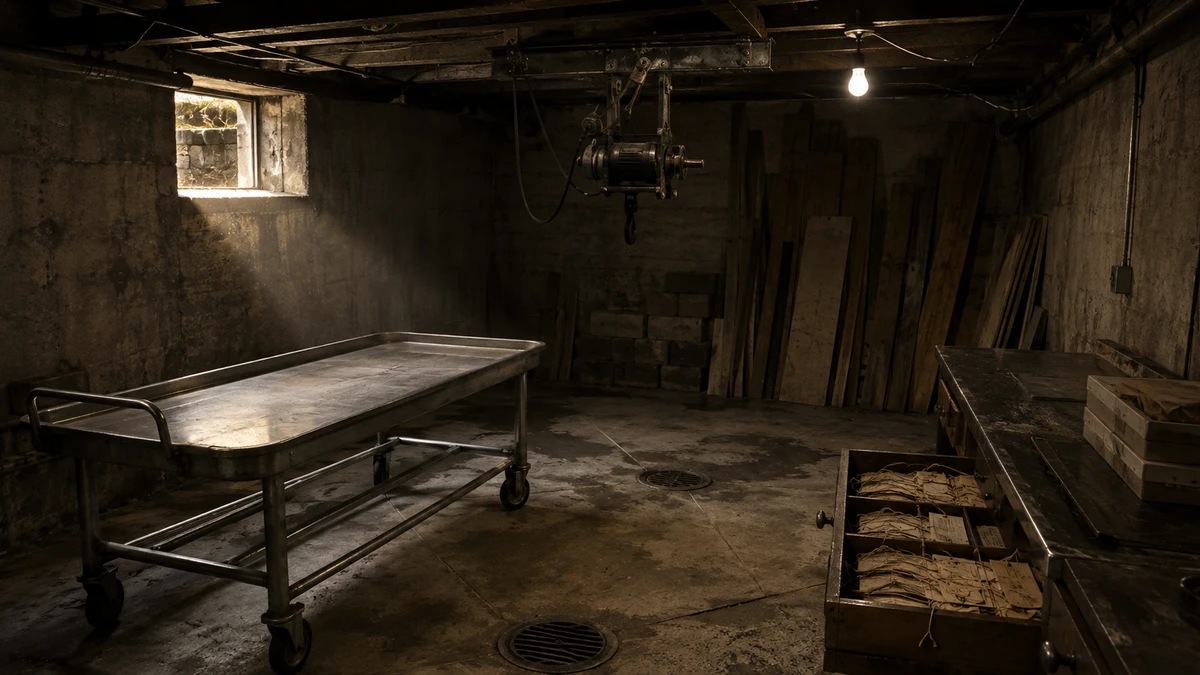
None of it had been cleared out. It had all simply been left where it was, stacked behind building materials, waiting for somebody to move the building materials.
There is one window down there, set high in the wall at the level of the ground outside. The light that comes through it arrives at an angle. In the morning it reaches the corner of the trolley. By early afternoon it is gone, and after that the room belongs to a single bulb on a cord.
The switch is at the bottom of the stairs.
Which means that to turn the light on, you have to go all the way down first. Into the dark. Stand there. Then reach.
What the house used to do for a living
Before anybody lived here, this was a funeral home.
Locally it was known as the Hallahan Funeral Home. Upstairs was for receiving the living. The basement was where the dead were prepared — washed, embalmed, dressed, made presentable — and then taken up to the front room so that people could look at them one last time.
There is nothing unusual about that arrangement in a small American town. A house with enough room and a wide enough front parlour becomes the family business. And there is nothing unusual about the business closing, and the house being partitioned into rented units afterwards.
The layout was ordinary. What was not ordinary was that the equipment stayed.
The front room did not go anywhere either. The walls stand where they stood, the windows are the same windows, the ceiling is the same height. Converting a building changes the furniture in a room. It does not change the room.
The winch still bolted to the joists. The drains still open in the floor. The drawer still in place, and the tags still bundled inside it.
The family moved in and slept directly above all of it.
And then the house started making noise
The noise came from below.
Pipes knock at night — old pipes always knock. Timber contracts when the temperature drops — old timber always does. A basement is colder than the rooms above it — a basement always is.
Taken one at a time, every single thing has an explanation.
The trouble is that they did not happen one at a time.
They began to describe footsteps. Taps turning themselves on. Rooms where the temperature fell away in a matter of seconds, far enough that you could see your own breath. Something moving through the house after dark, and not just one something.
The other half of the duplex was occupied too. On that side, nothing happened at all.
They stopped wanting to go down there. But the washing machine was in the basement. So was the water heater. So was the fuse box. Everything that made the house work as a house was in that one room.
They had to keep going down.
Eight people generate several loads of laundry a day, and somebody has to be down there while the machine runs. That person stands on a floor that slopes towards its drains and listens to the ceiling — timber, footsteps, a chair dragged back.
A house with eight people in it always has somebody walking around in it.
It took a while before they noticed what they had started doing. Standing down there, waiting on the machine, counting in their heads how many people were supposed to be upstairs.
Then the house began showing them things
After the noise came the smell.
Not the smell of an old house. An old house smells dry — timber, dust, air that has been shut in too long. This was wet. This was meat going over.
It had no source. Not the kitchen, not the bins, not some corner of the basement. It arrived on its own, filled a whole floor of the house, and at some point took itself away again, as though somebody had come and collected it.
Then the water.
Carmen Snedeker, the mother of the household, said that when she mopped, the water in the bucket turned red. Not the murky brown of dirty water. Red.
And then the house began showing them people.
She described two.
The first had long black hair hanging down, and eyes that were black too — not dark brown, but black all the way across, with nowhere for the white of the eye to be.
The second was the opposite. White hair, white eyes. It wore a pinstriped suit, pressed, buttoned to the collar — the kind of suit you only ever see people wearing on one sort of occasion.
In a house that used to be a funeral home, nobody has to say out loud who wears that suit.
Things started going missing. Objects were not where they had been put. Somebody would wake in the night unable to move, unable to make a sound, and would simply have to wait for it to finish.
They stayed in that house one year, then a second.
Eventually they admitted the thing they had been avoiding: this was not going to stop by itself.
The call they made
They found Ed and Lorraine Warren — Connecticut paranormal investigators who had become nationally known a decade earlier through the Amityville case.
The Warrens did not come for an afternoon.
They moved into the house with a team and stayed for weeks. Equipment set up, watches taken in shifts, everything they believed could be recorded written down. By their own later accounts, people in that house during those weeks were slapped, shoved and thrown to the floor.
One of the team was a young man named John Zaffis, Lorraine’s nephew. One night it was his turn to sleep in the house.
He said he was awake and could not move. Pinned there, eyes open, nothing in his body answering him.
Then he heard something on the stairs.
The voice asked him: “Do you know what they did to us?”
There was no second sentence. He was given no explanation, and the house has never given anyone one since.
After several weeks the Warrens announced their conclusion: the house was possessed, and what had settled into it was not human.
Then they went to the Church. Two priests came, blessed the house and said a Mass in it. When it was over, the house carried on as before. Ed Warren said that partway through the rite his heart went wrong, and that it righted itself only once the rite was finished — and he put that on the house’s account as well.
On 6 September 1988, a priest performed an exorcism in that house.
The family said that from that day, everything stopped.
They stayed on in that house a while longer before they left, but the story did not go with them. It stayed in the house, and from there it started to travel on its own.
What happened to the story after that
In 1992 a book was published, built on the family’s account, called In a Dark Place. That was the first time the whole thing was set down, printed and put on a shelf where strangers could pick it up.
On 6 August 2002 the Discovery Channel aired a documentary special. It was titled A Haunting in Connecticut. It rated well enough that it grew into a long-running series.
On 27 March 2009 The Haunting in Connecticut, a feature film built on the story, opened in American cinemas. It took $78.8 million worldwide.
Twenty-three years from the week they carried the boxes in to the version of them up on a cinema screen.
And through all twenty-three years the house went on standing on Meriden Avenue. It was not demolished. It was not turned into an attraction with a ticket booth. There is no plaque on it.
People simply kept living in it.
The people who live there now
On 16 March 2009 — eleven days before the film opened — a Connecticut television station knocked on that door.
The owner, Susan Trotta-Smith, answered. She told the reporters her family had been in the house for ten years: “Our house is wonderful.” As for the stories, her verdict was that the whole thing was Hollywood foolishness, and ludicrous with it.
In the same report, Sergeant Lowell DePalma of the Southington police explained why officers had been called out to the address. Not because of anything inside the house. Because of what was happening outside it. People were stopping their cars, getting out, and walking onto someone else’s property looking for a thing that is not there. He said he was sad to hear it.
That is the shape the story finally settled into.
Not the winch in the basement. Not the bundle of tags with string on them. Not whether anything walked across those upstairs rooms after 1986.
A family lives in this house, and on certain evenings strangers pull over at the kerb, get out, and start up the path.
Somebody comes to tell their children that their home is haunted.
You can empty a house. You can partition it, repaint it, unbolt the winch, seal the drains, throw out everything in the drawer.
But once a story has been told about a building, nobody has ever worked out how to get it back off again.
Whether those tags are still down there, I don’t know. What the voice on the stairs was asking about, nobody has ever answered either.
What I do know is that tonight, if someone drives along Meriden Avenue, the car will slow down.
And Connecticut has never once stopped telling these stories.