Japan's Village of Evil Spirits: Sugisawa
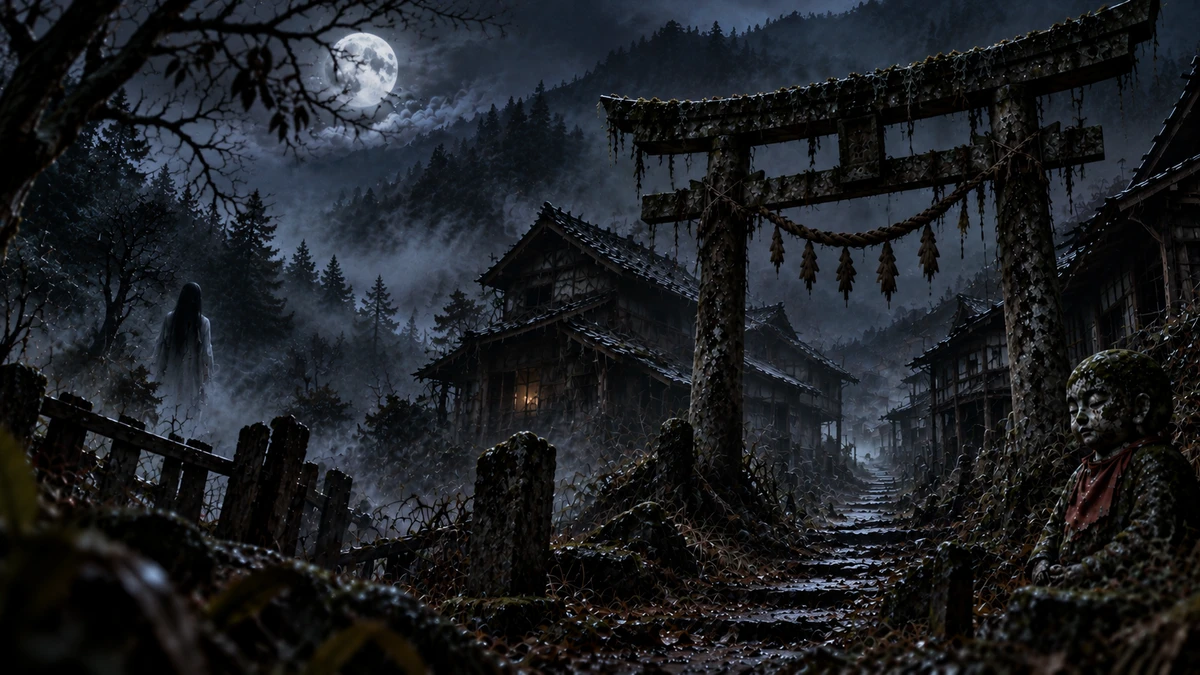
In the mountains of Aomori Prefecture, in the north of Japan, there is a road that leads to one place only.
A sign stands beside it: “Those who go past this point cannot be guaranteed their lives.”
Further on, the road ends at a torii gate. The wood has rotted. At the foot of one pillar lies a stone, and the stone is the shape of a human skull.
Past the gate there is no fork, only the one track, and at the end of the track, a few houses.
What the village says
The village is called Sugisawa.
This is how it is told. In the early Shōwa years, a young man of the village woke one day as if he had been possessed, took up an axe, and killed the people of the village one after another until he was the only one left. Then he died too.
A village with no one in it was folded into the next village along. The name was taken off the map. It cannot be found in the prefecture’s papers. It is as though the place never existed.
But the houses are still there.
The blood is still on the walls, gone black, in patches.
The dead there never left.
Those who go there do not come back.
The people who know the village are mostly old. Ask them and they will say yes, long ago there was a story like that, a lot of people died. Now and then a carload of young people takes a wrong turn in the mountains and drives straight into it: the gate, the stone, the houses standing here and there, and just as they are wondering how there could be a village up here, a figure steps out of one of the houses with an axe in its hand and comes after them. Some who went in came back mad.
In 1995, students at a university in Aomori were asked to write up the frightening stories they knew, and Sugisawa was in the reports. The line went roughly like this: a man killed everyone in the village, the souls that could not be saved drag visitors toward death, and it is not a village any more, it is a grave.
Handprints on the rear window
Night. A car drives up into the mountains.
A few men inside, daring each other, pushing further in. The road narrows. The cedars close in from both sides. The headlights reach only the next few metres.
Then the road ends.
The car can go no further, so the driver puts it into reverse and turns to look back.
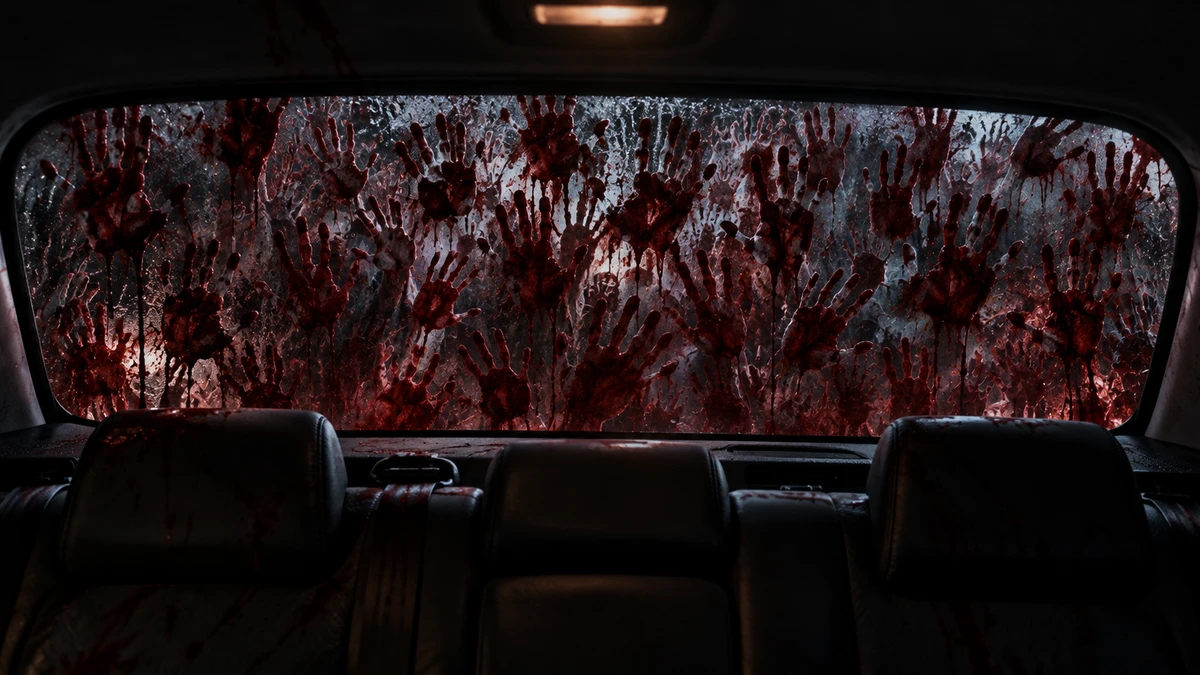
The rear window is covered in red handprints, dozens of them, one against the next, packed across the whole pane, as if a crowd were pressed up behind the car with their palms on the glass, looking in at the people inside.
Nobody dares get out. The car reverses all the way down the mountain, and nobody looks back a second time.
The next morning the prints are gone. The glass is clean, as if nothing had happened.
It is only while wiping the car down that the driver remembers something about the night before. He had seen the prints from inside the car, looking out, and every one of them had its palm turned toward him, fingers pointing up, the way a hand looks when someone standing there presses it against the glass.
They had not been pressed on from the outside.
Those hands had been pressed on from inside the car.
The blood on the wall
There is only one road in.
At the torii, most people stop. No one stops them. They simply cannot make themselves go any further, because the track beyond the gate is too dark, dark in a way that seems to lead nowhere. They stand there a moment, turn around and go home, and tell people they have been to Sugisawa.
But a few people really did go through the gate.
Past the gate, at the end of the track, the houses are still there. Doors, walls, all of it, as if the people inside had only stepped out. Blood is stuck to the walls, in great patches, gone black, dried into the boards as though it had seeped out of the wood itself.
Then one of them, with no warning, loses their mind.
Nobody knows what they saw. They scream and thrash, and the others haul them back down the track, back through the gate, back to the car, and drive down the mountain without looking back.
The person who wrote it down said they did not know whether it was the young man with the axe or the villagers he killed. Only that anyone reading this who still wanted to go should not. That wall with the blood on it, they said, was there every time they closed their eyes.
There was another one, on a motorcycle.
They were not looking for Sugisawa. They took a wrong road in the hills and rode into a village with no one in it. The smell hit first, raw and fishy, like a cutting board that had not been washed in years. Four or five houses, all of them abandoned, and the rain came down so hard the road disappeared, so they pushed open the nearest door and stepped inside.
It was dark in there. The walls, the paper screens, the tatami, all of it streaked black, spray after spray fanning up from the floor, as if a body in that room had once been opened up and had gone everywhere.
They stood in the doorway and did not take another step.
They turned and ran, and let the rain do what it liked.
The car was already facing home
For a village this famous, hardly anyone has actually been. One person said they knew exactly one, and this is how that one came back.
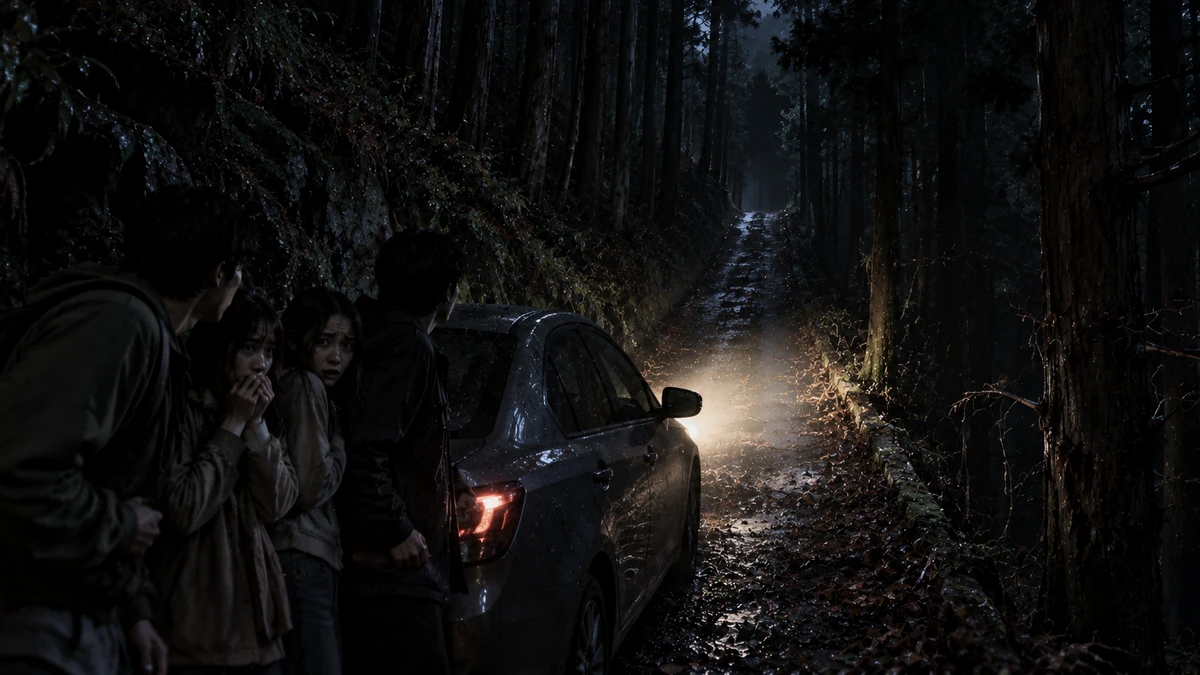
Two men, two women, one car, and a dare to go and find Sugisawa.
The road was nothing but forest and mountain, a single track too narrow for two cars to pass. Dark by then. The headlights on the road ahead, the cedars packed like a wall on either side, the track climbing until there was no more track.
They got out.
There was nothing.
No houses, no gate, no stone, not even a trace that a house had ever stood there. Just grass, black in the dark, all of it leaning one way when the wind went over it.
The four of them stood in the grass, deflated, laughing, cursing the place. Halfway through the laughing, one of them went pale and said they felt sick and wanted to go, so they went.
The track was too narrow to turn around in. On the way up they had agreed: going back, they would reverse the whole way down.
They walked back to the car.
It was facing home.
The four of them had been standing together the whole time. The keys were in a pocket. No one had touched the car. And yet it had turned, its nose pointing down the mountain, as though someone had swung it round for them and was waiting for them to get in.
Nobody spoke. One after another they felt sick. They got in and drove, all the way down, and none of them looked back at the field.
After they got home, the people around those four began to die. One after another. Misfortunes, every one, and no one could say why.
One of them was taken to a temple nearby. They had felt nothing wrong themselves. They walked in, and the priest looked up, took one look at them, and said:
“You’ve brought quite a few people back with you.”
The priest performed a cleansing. Whether the ones they brought back ever left, the priest did not say.
The stories give people who come back from that place another ending too. They come home and suddenly begin to say things nobody can understand. Their families ask what they are talking about, and they pay no attention, they just keep talking to a spot in the room where no one is standing. A few days later, they are found hanging in their own room.
The ones who never left
The road is still there.
The sign still stands beside it, and the rain has not washed the words away. The gate is still there, the stone still at the foot of the pillar, and past the gate the houses are still standing, the blood on the walls black and shining.
The dead there never left.
Those who go there do not come back, and those who do come back do not come back alone.
The men who drove up into the mountains brought the dozens of hands on their rear window home with them. The ones who went through the gate brought back a friend who never came to their senses again. The four young people came down the mountain, and the priest saw at a glance the whole line of people following behind them.
Nobody knows where the ones who followed them home went. Only that from that day on, the people around them died one after another, and that the one who talked to an empty spot in the room was talking to someone who had been in the room all along.
Sugisawa is not on the map. But every person who has come back from it has brought Sugisawa home.