The Real Story Behind The Conjuring: The Enfield Poltergeist
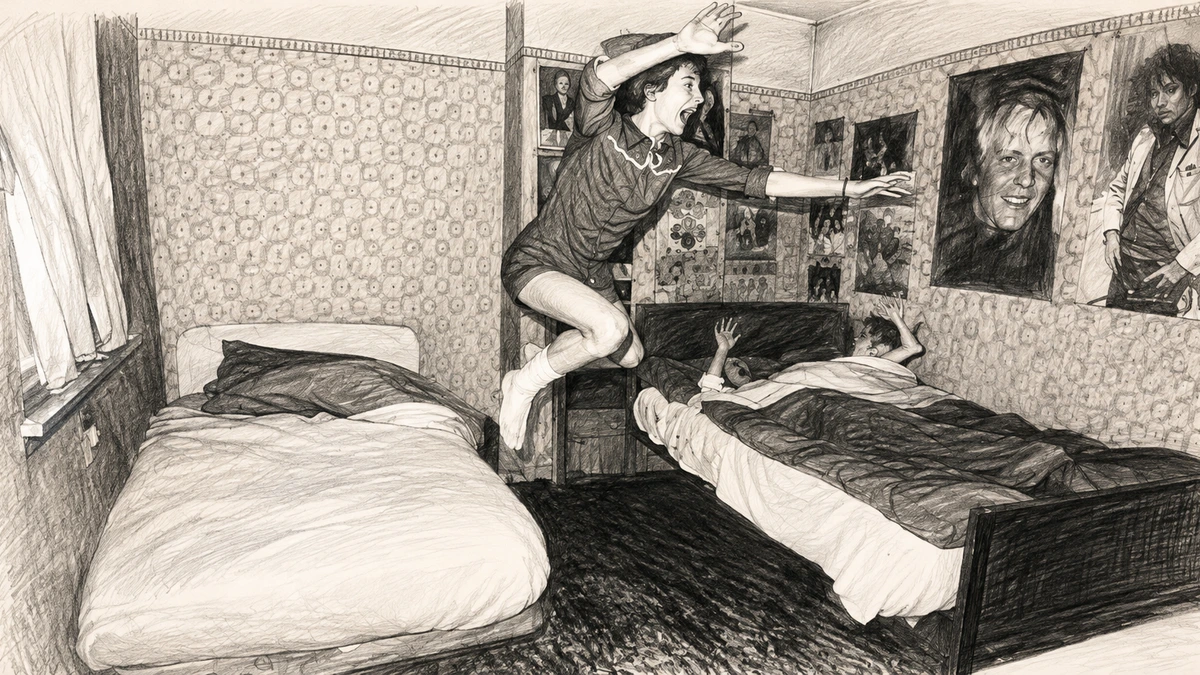
Half past nine on the evening of 31 August 1977. Enfield, north London. 284 Green Street.
In the back bedroom, twelve-year-old Janet Hodgson and her younger brother John, who was eleven, heard something shuffling across the floor. Their mother came in. All three of them heard knocking on the wall.
Then the chest of drawers moved.
It slid sideways across the room, about forty-six centimetres. Nobody was touching it.
The three of them ran screaming down the stairs and out to the neighbours for help.
The knocking that followed him around the house
The house was a three-bedroom council semi, built in the 1920s. Living in it were Peggy Hodgson, divorced, and her four children: Margaret, thirteen; Janet, twelve; John, eleven; and Billy, seven.
Next door lived a builder. He and his twenty-year-old son came back to number 284 with the family and heard more knocking as soon as they were inside.
He put up houses for a living. He walked the whole place through, looking for whatever was making the noise.
He said afterwards that he could not find a source for it. And that the knocking seemed to follow him around the house.
His wife called the police.
Another wall, and another four taps
Two officers arrived at around one in the morning. The statement one of them wrote afterwards ended up copied into the files of the Society for Psychical Research.
She described the lights in the living room being switched off, and how almost immediately she heard knocking on the wall backing onto the neighbours: four distinct taps, and then silence. About two minutes later there was more tapping, from a different wall this time, and again a distinct peal of four.
The officers and the neighbours checked the walls, the attic and the pipes. They found nothing that would explain it.
Then they all went into the kitchen to check the refrigerator pipes, leaving the family and the policewoman in the living room. The lights went off again.
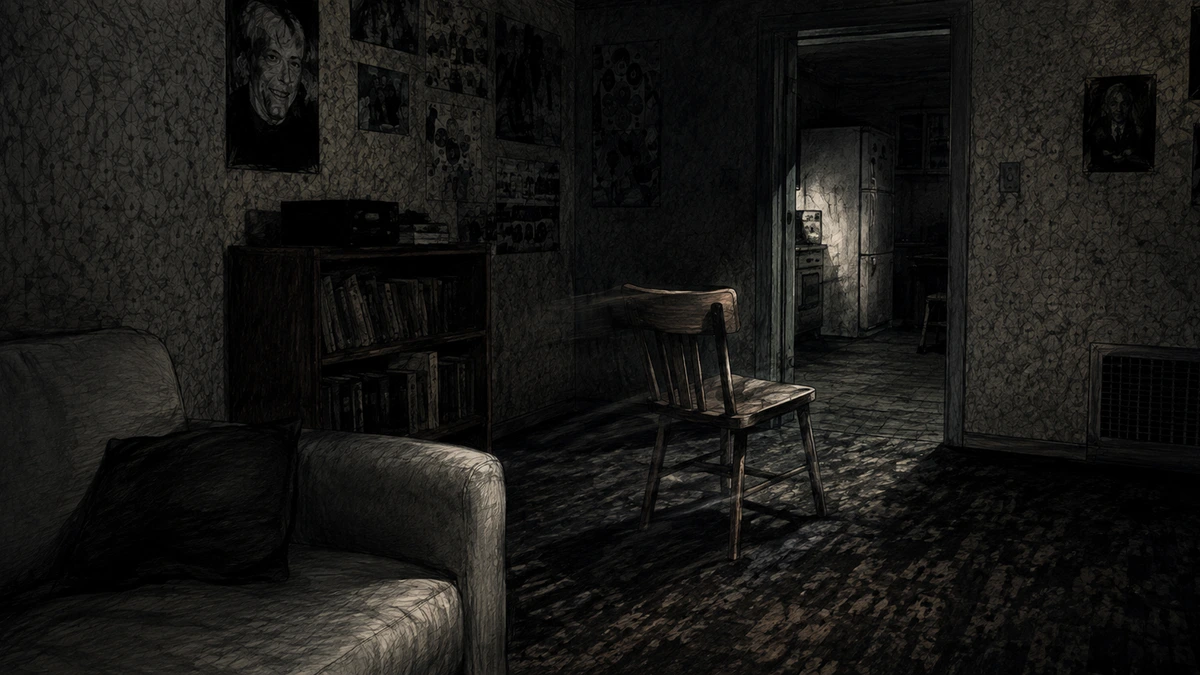
A few minutes later, the eldest son pointed at a chair standing next to the sofa.
“I looked at the chair and noticed that it was wobbling slightly from side to side, I then saw the chair slide across the floor towards the kitchen wall.” It moved about a metre, and then came to rest.
“At no time did it appear to leave the floor. I checked the chair but could find nothing to explain how it had moved.”
Nothing else happened that night, but what had come before it was already strange enough.
A piece of Lego, and a bruise that took days to fade
After the police left, things in the house started to fly.
Over the next few days marbles and Lego bricks crossed rooms of their own accord. Council officials came, clergymen came, other people came, but not one of the disturbances stopped.
On 4 September the woman next door telephoned the Daily Mirror, hoping the paper could put her in touch with somebody who understood this sort of thing.
The paper sent a reporter and a photographer. Both men saw objects in flight. The photographer was hit on the forehead by a piece of Lego travelling at speed. He said the bruise was still visible days later.
Three days after that, the paper sent a senior reporter, George Fallows.
Fallows left an account of what he made of it. The emotional atmosphere in the house and in the street, he wrote, ran from hysteria through terror to excitement and tension, and that had made it difficult to record satisfactory data. Even so, he was satisfied: to the best of their ability, they had eliminated the possibility of total trickery.
“In my opinion this faking could only be done by an expert.”
The paper went no further with it. Fallows rang the Society for Psychical Research.
The carpet that came up in the same shape every time
The society sent two investigators. They spent more than a year on that house: 180 visits, 25 all-night vigils, and eventually more than 180 hours of tape.
Some of what they and others recorded went like this. Marbles flew through the air and landed on the floor without rolling. Drawers slid open on their own. The tubular door chimes swung from side to side, many times over. A framed certificate was pulled off the wall while there was only one person in the room. Metal spoons bent, and the lid of a metal teapot was deformed. A settee was levitated and overturned in front of several witnesses. The iron frame of a built-in fireplace was wrenched out of the wall.
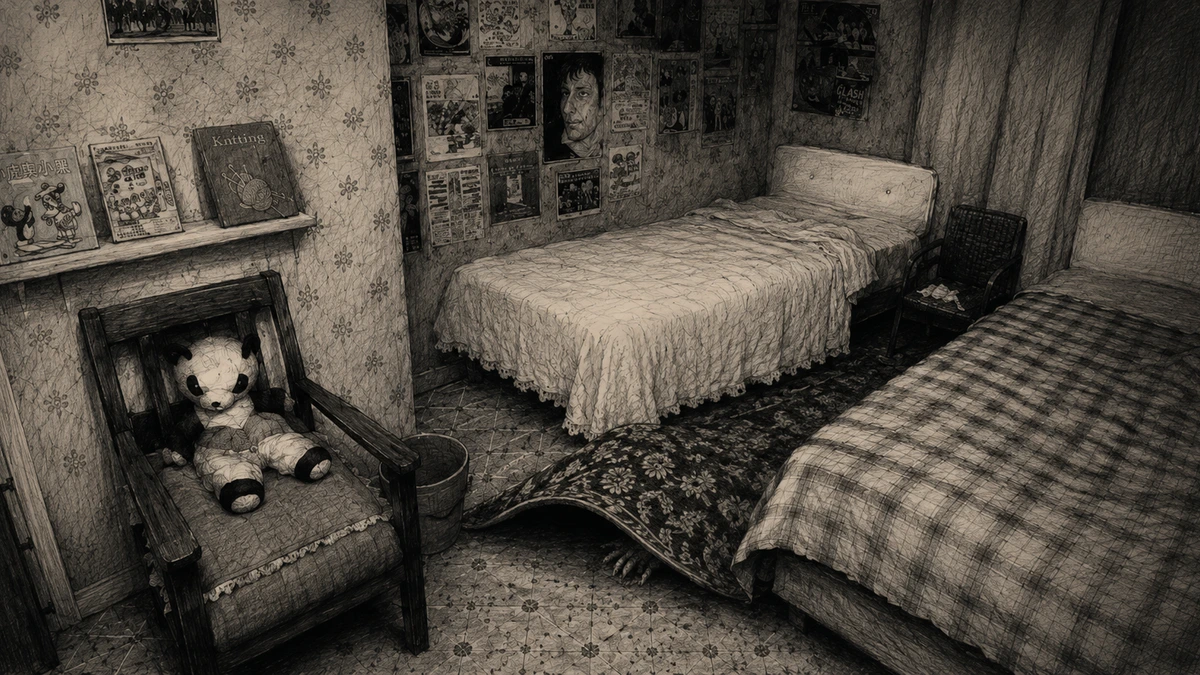
And there was the bedroom carpet.
It was pulled up at the edge, again and again. And every time, it came up in an identical shape. One of the investigators tried to reproduce that shape himself, and never once managed it.
Some of it was seen from outside. A school crossing warden mentioned walking over to collect the crossing sign she kept under the hedge at the front of the house, and looking up at it:
“I was standing there looking at the house, when all of a sudden a couple of books came flying across and hit the window. It was so sudden. I heard the noise because it was so quiet, there was no traffic, and it made me jump…”
“Then after a little while, I saw Janet. I don’t know if there’s a bed underneath that window, but she was going up and down bodily as though someone was just tossing her up and down bodily, in a horizontal position, like as if someone had got hold of her legs and back and was throwing her up and down.”
She was certain the girl came up to about the height of the window. If she were bouncing, she thought at the time, she would have bounced from her feet; she could not have got enough power off her back to come up that high.
From the first year of the haunting, there were people who did not accept any of it. And the two girls in the Hodgson house were caught out. An investigator had watched Janet banging a broom handle on the ceiling; a camera caught her trying to bend spoons. The investigators conceded that this had happened, but their position was that the occasions were very few, that they were spotted at once, and that the girls admitted it when they were told so. They went further: with all of this going on around them every day, they argued, it would have been odd if the children had not tried to copy it.
They did not leave, they kept sitting up all night.
First whistles, then barking
In December 1977, three months after it all began, a voice that did not belong to the house began to come out of Janet.
It started as a series of whistles.
Then it was barking, like a dog.
Then it grew into a human voice. An elderly man’s, harsh and guttural, nothing like the girl’s own.
It swore.
It said its name was Bill Wilkins, said it had lived in this house, said it was still alive, said it slept in Janet’s bed.
And the previous occupant of that house had in fact been a Mr Wilkins, and he had died there.
Early in January, her older sister Margaret began speaking in the same harsh voice.
Tape over her mouth, then a mouthful of water
The investigators wanted one thing ruled out first: whether the girl was making the voice herself.
They taped up her mouth.
The voice still came.
They filled her mouth with water.
The voice still came.
They put a contact microphone on the back of her head, to find out where in her body the thing was actually coming from. What it picked up was a different, louder sound than her voice.
A speech therapist was brought in and listened for a long time. She could not say where the sound was coming from, or how it was being sustained.
Two university specialists ran instruments on her throat. The readings pointed to a way of producing sound with the throat muscles under tension, working independently of the vocal cords. That has a known price, though: roughly six weeks of hoarseness and a sore throat.
Janet had no hoarseness. And no sore throat.
A ventriloquist came to look and thought the voice was being produced from the diaphragm. The investigators disagreed. One of them finally put money on it: any child who could reproduce the voice under conditions he specified, and he would give £500 to a charity of their choosing. He later raised it to £1,000.
Nobody came for it.
One day a practising solicitor sat down opposite the girl and interrogated the voice directly, pushing it to account for itself.
It said:
“I went blind, and I had a haemorrhage, and I fell asleep and I died on a chair in the corner downstairs.”
Eighteen years later a Japanese film company came to make a programme about the case. The son of the house’s former occupant came forward. He confirmed that his father had indeed died in that house years earlier, downstairs, in the circumstances the voice had described.
In the middle of the night, people talking downstairs
In May 1978 the Society for Psychical Research set up a committee to examine the investigation itself. They interviewed witness after witness.
The committee’s conclusion was that there was good evidence for paranormal phenomena described by credible informants. On incidents that could not be clearly observed, and on witnesses they found less than entirely convincing, they reserved judgement; and they were wary of attributing a paranormal origin to Janet’s other voice at all. One of them said she was personally satisfied that paranormal events had taken place at Enfield, and called the tearing away of the fireplace an item of poltergeistery of the first order.
The American investigators Ed and Lorraine Warren also visited the house. They are the same pair who, nine years later, would spend weeks inside a former funeral home in Connecticut. The Conjuring 2, in 2016, is about their days inside this house.
By the second half of that year, the disturbances were subsiding.
There was a second thousand pounds. Journalists approached the woman next door and offered her £1,000 to say the whole thing had been a pack of lies. She did not take it. She and her family later signed statements repudiating the allegations of faking.
Peggy Hodgson avoided publicity once it was over, and never changed her position about what she had lived through. She died in 2003. Janet and Margaret have made occasional appearances in documentaries since, and their account has not changed either. Asked about it years afterwards by a newspaper, Janet mentioned being bullied at school and nicknamed Ghost Girl, and said of the experiments: “They did all sorts of tests, filling my mouth with water and so on, but the voices still came out.”
After Peggy died, the house was briefly taken by a mother of four. She said she saw nothing, but she was not comfortable there: “There was definitely some kind of presence in the house, I always felt like someone was looking at me.” Her sons would wake in the night saying there were people talking downstairs. Then she found out the history of the place. “Suddenly, it all made sense,” she said. They moved out after two months.
The argument that started in the first year has never stopped.
Those 180 hours of tape have been catalogued and digitised, and sit in the society’s archive.
The voice is still on them. To make it speak, all you have to do is press play.